Clearance revenues, banks and winter: How much more can the Palestinian economy withstand?
Funding talks with the World Bank raise a question that goes beyond paying salaries: How does a cash shortage spread from the treasury to banks, businesses and households? Six institutional sources map the crisis’s limits, while three scenarios test its possible course over the coming months.
From grant talks to the question of continuity
Palestinian Finance and Planning Minister Estephan Salameh discussed with a World Bank delegation on the fourteenth of November how to accelerate completion of the requirements for a new grant, with half earmarked for the budget and half for projects, especially in Gaza. WAFA quoted the minister as saying that continued withholding of revenues was putting pressure on basic services, while the Bank affirmed its support for the government and reform programmes. These talks do not establish that the money has arrived or that the revenue crisis is over. [1]
The problem confronting the Palestinian treasury lies between agreeing on funding and being able to spend it. An announced grant cannot settle a bill before it is transferred. A payment that enables partial salaries may ease households’ hardship without restoring regular government resources. The issue therefore goes beyond the date of the next salary payment to the economy’s ability to keep functioning when the timing of payment itself becomes uncertain.
This analysis locates the risk in simultaneous pressure on three parties: a government that receives resources irregularly, banks carrying obligations connected to it, and households needing income and services as winter needs grow. Each may withstand pressure on its own, but shifting the burden among them narrows everyone’s options. Improvement should therefore be judged by the regularity of the financial cycle, rather than the size of a funding announcement or a salary percentage paid once.

How do withheld revenues affect the market?
Clearance revenues are tax receipts collected by Israel on behalf of the Palestinian side and then supposed to be transferred to it. In its autumn 2026 economic update, the World Bank lists restoring these transfers and making their timing predictable among recovery priorities. According to the update, lending linked to the Palestinian Authority accounted for 45% of total credit, while banks’ direct exposure to the government reached $4.2 billion by June, compared with two billion dollars before the third quarter of 2023. [2]
These figures concern the periods specified; they are not a statement of today’s accounts. They nevertheless show how closely the budget and banking sector are connected. Delays at the treasury may affect household budgets and suppliers’ accounts, then return to banks as additional borrowing needs or difficulty making repayments. The limits of the data do not negate those connections, but prevent them from being turned into a numerical estimate of losses that have not been measured.
When government payments are delayed, an employee may postpone a purchase and a supplier may delay a wage payment or a bill. If both borrow to bridge the gap, the bank absorbs some of the pressure; if they refrain from borrowing, the effects may appear in shops’ sales and businesses’ operations. This is not a uniform response by every employee and company, but a set of possible channels explaining how a revenue crisis moves beyond the ministry into the market.
The value of revenue recorded in the accounts is also different from the cash available to spend. A payment settling an old obligation improves recipients’ position, but differs from a recurring resource on which they can base next month’s plans. On its own, it may be insufficient to encourage a company to expand or a bank to fund a long-term project. The party ultimately bearing the cost of delay may not be the creditor whose name appears first in the accounts.
As pressure intensifies, regular flows may matter more for confidence than a large announcement with no known implementation date. This can be tested by tracking actual payments and adherence to schedules: Is the gap between amounts falling due and their settlement shrinking, or is it being shifted to a supplier or employee less able to bear it?
Banks between meeting payments and financing production
Liquidity is the ability to make payments when they fall due, whereas solvency concerns an institution’s capacity to absorb losses and meet its obligations more broadly. Confusing the two obscures assessments of banks’ condition. The World Bank notes that correspondent banking arrangements with Israeli banks extend to December 2026; these relationships allow transactions and payments to be settled through the other financial system. [2]
The approach of a new decision may affect planning, but does not establish that transactions will stop or that banks are unable to meet their obligations. Uncertainty over transfer dates may lead a bank to hold larger reserves or postpone a project requiring long-term financing whose flows it cannot predict. If several institutions behave similarly, productive lending may weaken without a system-wide banking crisis.
These are possible approaches to managing risk, rather than information about decisions taken by a particular bank. Monitoring should therefore cover the terms and maturity of business financing, alongside the continuity of daily payments. Confidence that payment channels are working does not, by itself, answer whether a business can secure the money it needs to remain productive.
Addressing this pressure requires combining continuity of settlements with a workable plan for dealing with obligations. Unlimited borrowing to offset every shortfall may postpone the problem, while abrupt tightening may deprive viable businesses of working capital: the money needed to buy inputs and pay wages before sales receipts arrive. The crucial distinction is between financing that sustains productive activity and financing that covers a repeatedly renewed gap with no clear prospect of resolution.
Money alone cannot overcome movement restrictions
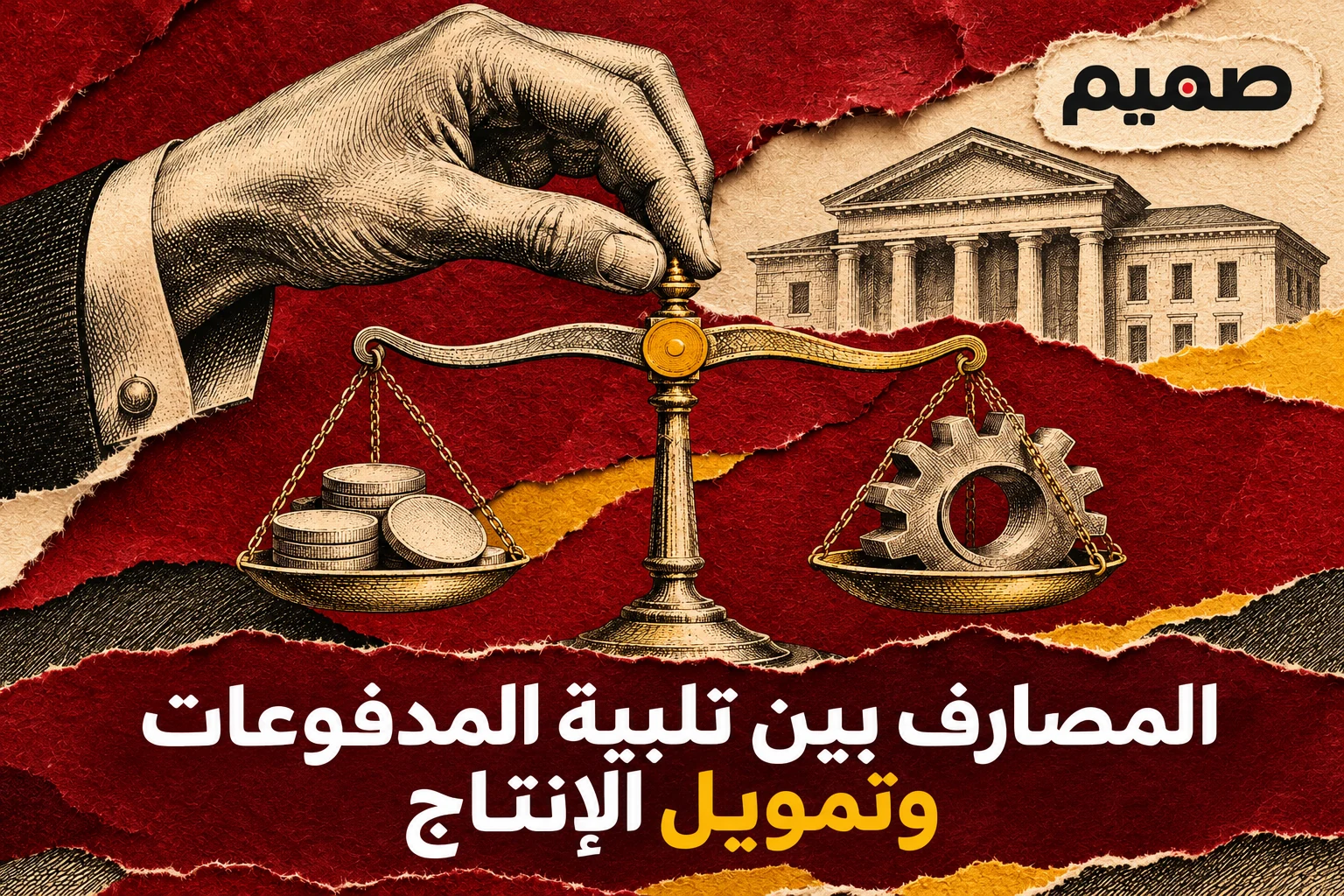
The Palestine Economic Policy Research Institute, MAS, links continued withholding of clearance revenues, delayed payments and accumulating arrears in the summary of its October update. It also records the effects of movement restrictions in the West Bank on transport costs and access to markets. These constraints determine what financing can accomplish; the crisis cannot be reduced to a shortage of money. [3]
A business that receives funding but cannot transport inputs or deliver its goods will not benefit in the same way as one able to reach its customers. If transport remains costly and delivery slow, a payment may go towards old expenses rather than hiring another worker. If financing is accompanied by more regular market access, the need for costly precautionary stocks may fall, improving the business’s ability to accept orders.
This compares two possible outcomes, rather than describing a result already achieved. What separates them is whether money can restart the production-and-sales cycle instead of being drained by recurring disruption. Financial accounts may therefore improve while economic activity remains constrained, and money may arrive without employment opportunities expanding alongside it.
What does a donor commitment mean?
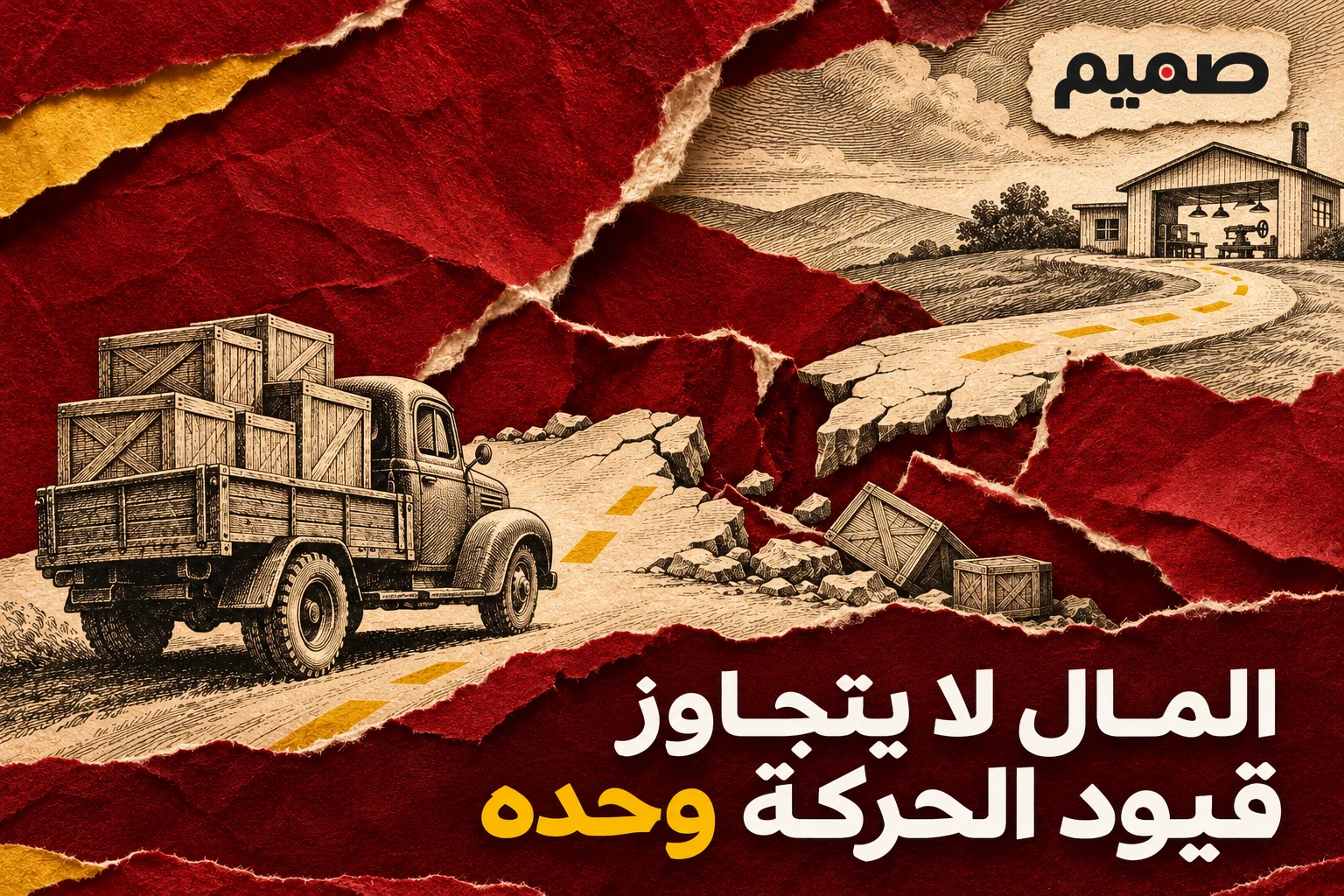
The European Commission’s implementing decision of 28 May sets a maximum contribution of €392 million to support the Palestinian Authority and the United Nations Relief and Works Agency for Palestine Refugees, UNRWA, during 2026–2027. Not all of this amount is allocated to the treasury, and the decision does not mean it has all been disbursed. Implementation of the 2027 component is also conditional on appropriations being available after the budget is adopted. [4]
These conditions illustrate the distance between a commitment and liquidity. The document defines a ceiling, purposes and an implementation mechanism, but does not establish that money has arrived and is immediately available to spend. Overlooking this distinction can turn a decision covering several purposes and years into the misleading impression that the payment crisis has been resolved.
Different needs meet within that gap. The government needs regular resources to maintain services; the donor seeks a verifiable impact and a clear use of funds. The bank needs to know when flows will arrive, while the supplier awaits settlement of its dues. This is an analysis of the incentives associated with each party’s position, rather than knowledge of officials’ intentions or decisions they have not announced.
A clear disbursement schedule and information open to scrutiny may bring those needs closer together. Slow procedures may drive them further apart when a service is at risk of interruption. The challenge is to arrange verification and disbursement so that both money and services are protected, without assuming that a funding announcement settles questions about timing or use.
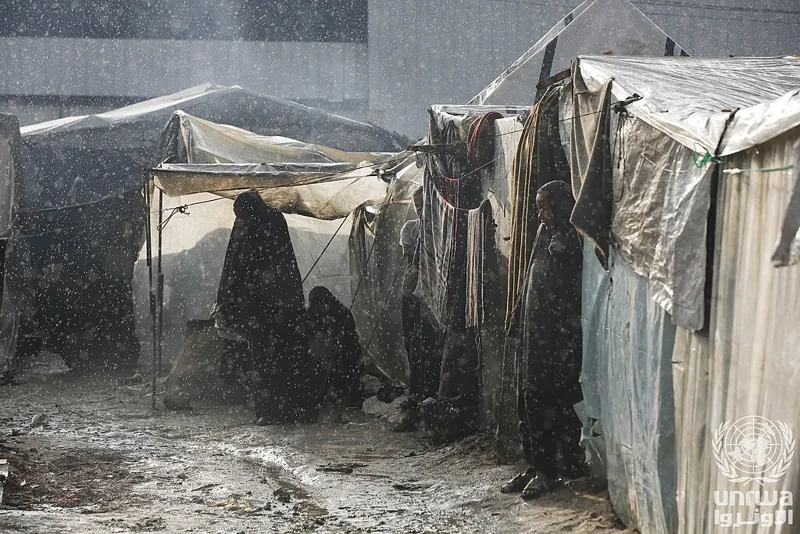
Winter has a deadline that cannot await completed procedures
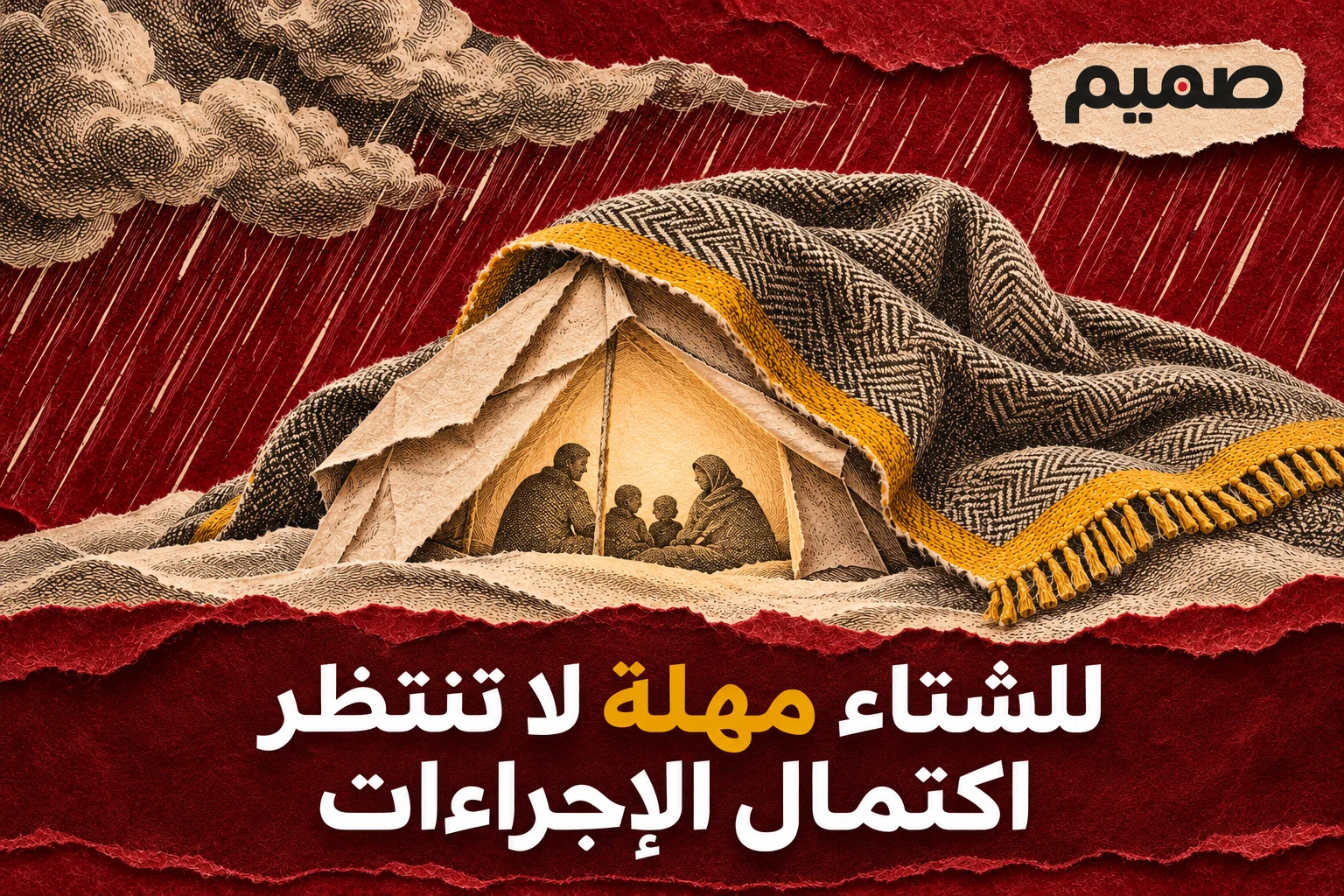
In an appeal dated 17 September, the United Nations Children’s Fund, UNICEF, requested $97.5 million to protect 540 thousand children and their families in Gaza and the West Bank, as part of a response running from October 2026 to March 2027. It stressed timely funding to procure, transport and pre-position supplies. This was a need announced in September, rather than a measurement of the shortfall remaining in mid-November. [5]
The value of money here varies according to when it arrives. Spending before risks intensify may prevent greater needs later, whereas delayed payments lose some of their preventive capacity. Postponing repairs to a drain or protection for a shelter may increase the cost of the next response, although the available sources do not allow that increase to be quantified.
The costs of delay also extend to education and health: deferred spending may interrupt a service or place an additional burden on a family. Maintaining a service protects existing resources of money, time and expertise that may be more costly to rebuild after a prolonged interruption. Implementation time therefore matters when prioritising spending, alongside the value of the bill, without reducing its effects on people to a financial calculation.
Cash assistance does not mean market recovery
In a statement issued on 30 September, the World Food Programme announced a Korean contribution of five million dollars, divided between assistance through electronic wallets in Gaza and food vouchers in the West Bank. It explained that some improvement in the food situation depends on continued assistance and does not, by itself, reflect a recovery in livelihoods and markets. [6]
A payment method gives households some flexibility, but does not guarantee that goods are available or accessible, nor does it turn emergency assistance into a sustainable income. If shops can restock and make payments, a transfer can protect consumption and support local activity. If supply or access is disrupted, the assistance’s nominal value may not have the same effect. This is a conditional relationship, rather than an estimate of a particular price increase.
Counting transfers or adding up announced funding therefore leaves part of the outcome unmeasured. What matters most is whether the money reaches its recipient and whether they can buy what they need when they need it. Relief channels are connected to the economy in which they operate and to shops’ and households’ ability to use what comes through them.
Three paths to be tested over the coming months
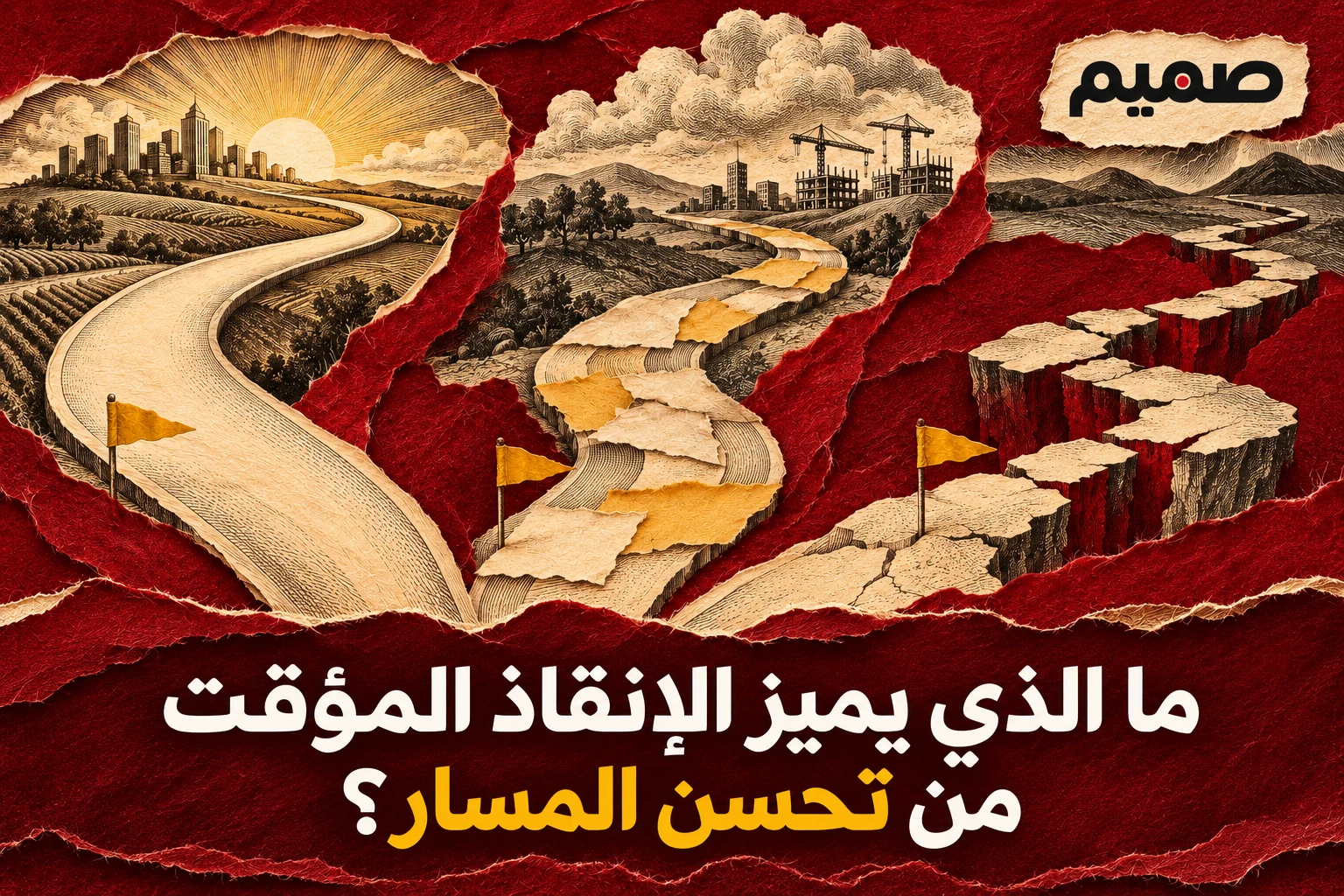
The path of orderly easing begins with regular revenue transfers, longer-term assurance for banking relationships and funding arriving within a transparent plan for arrears. Households and businesses may then become better able to plan. Earlier losses, movement restrictions and Gaza’s needs nevertheless remain obstacles to rapid recovery; a financial decision cannot remove them.
Signs of this path would include repeated transfers on known dates, an end to the growth of arrears, and better access for suppliers and businesses to payments due and financing. A stable sequence of implementation gives these indicators weight; a successful meeting or an isolated announcement is insufficient to establish that the trajectory has changed.
The second path is continued crisis management through temporary payments: intermittent grants, partial salaries and short banking extensions, alongside accumulating obligations. Such arrangements may avert acute interruptions and give households real breathing space, but leave investment and employment under the pressure of uncertainty. Signs include an exceptional payment followed by a new gap, rising arrears despite funding, or continuing postponement of business purchases.
This path is fragile because successfully getting through one month may conceal diminishing capacity to get through the next. Continued payments may look like stability while the underlying financial resources and productive capacity are eroding. Observing that a complete stoppage has not occurred is therefore insufficient to judge the crisis’s direction.
In the third path, shocks coincide: further disruption to revenues or funding, documented payment disturbances and intensifying winter needs. Risks may then broaden to include interrupted purchases of inputs and services, and households being forced to sell assets or postpone needs. This is a stress scenario, rather than a prediction of collapse, and the evidence does not support assigning it a reliable numerical probability.
Movement towards it can be monitored through repeated settlement failures, longer payment periods for providers of basic services, and a simultaneous decline in access to winter supplies and transfers. These indicators together are more dangerous than an isolated indicator that can be contained, because one party’s difficulties then reduce others’ capacity to absorb pressure.
What separates temporary rescue from an improving trajectory?
Immediate liquidity may be the best use of available resources when alternatives are slower, even if it does not address structural causes. This argument carries weight when an intervention prevents an essential service from stopping or a viable business from collapsing. It weakens when it is unclear how much time the financing buys, what action will be completed within that period and how its effects will be measured.
This does not require delaying relief until a comprehensive solution is available. It requires connecting urgent intervention to a path that reduces the need to repeat it. Priorities may change if data show, for example, that lack of access has become the most binding constraint. The practical test rests on four questions: Has the money arrived? Has its timing become regular? Have arrears fallen rather than shifted between creditors? Have services continued, and have goods and assistance reached people?
Each answer has its own evidence: a donor announcement establishes a commitment, a disbursement record establishes a payment, and service data show an outcome. Comparing them at close intervals, while stating the data’s scope and whom they exclude, avoids celebrating a payment that has not changed the trajectory and overlooking improvement that is limited but tangible.
This analysis therefore gives priority to reducing uncertainty over resources and payments while protecting services and production. Regular revenues, continued settlement channels, clarity in dealing with arrears and timely preventive funding are complementary elements. A single grant cannot perform all these functions, however important its immediate impact.
This conclusion remains constrained by the absence of real-time treasury and bank accounts, and by the unknown outcome of the funding talks beyond the report cited. The scenarios are tools for interpreting what follows and should change with the evidence. The improvement worth tracking is money’s ability to complete its cycle through suppliers, businesses, households and services, with enough regularity to reduce the need for another rescue every month.