Israel’s Suspended Government: Will the Palestinian Vote Become the Key to Power or Fuel for Exclusion?
Gadi Eisenkot’s announcement that he is prepared to test a minority government has returned the Arab parties to the center of Israel’s governing equation, but it does not guarantee a shift in policies toward Palestinians. This analysis examines the coalition balance, the actors’ interests, the limits of change, and the scenarios that will determine the next government’s impact in the West Bank, Gaza and inside the Green Line.
On November 20, Gadi Eisenkot said he would move to form a “national emergency government” if his attempts to establish a broad coalition failed. This points to the possibility of presenting a minority government to the Knesset before his mandate expires on December 6.
This development does not only answer the question of who will succeed Benjamin Netanyahu; it opens a question more directly relevant to Palestinians: will the new seat balance make it possible to curb some policies of war, annexation and discrimination, or will the need for Arab votes turn into a broader delegitimization campaign without a genuine political return? [1] The importance of the moment stems from a clear paradox.
Netanyahu’s bloc holds 53 seats, Eisenkot’s Jewish bloc 48, while the two Arab lists hold 19 seats. Neither bloc has a majority of 61 lawmakers, but the Arab members gave Eisenkot an advantage in receiving the mandate without becoming guaranteed partners in his government.
Palestinian numerical strength can therefore determine who becomes prime minister, while its ability to change the security and settlement program remains disputed within the potential coalition itself. [2]
Numbers Confer Influence but Do Not Make a Coalition
Eisenkot received recommendations from 67 lawmakers, compared with 46 for Netanyahu, a figure suggesting a comfortable majority but not amounting to a coalition agreement. A recommendation to the president is a procedural step that does not oblige a party to join the government or support its budget. WAFA summarized the gap since the official mandate on November 8: Eisenkot leads in recommendations, but disagreements among the parties still obstruct their conversion into a coalition.
This is the knot that explains why Netanyahu remained head of a caretaker government despite his bloc losing its majority. [4] The camp supporting Netanyahu’s replacement consists of forces that do not share a common Palestinian program.
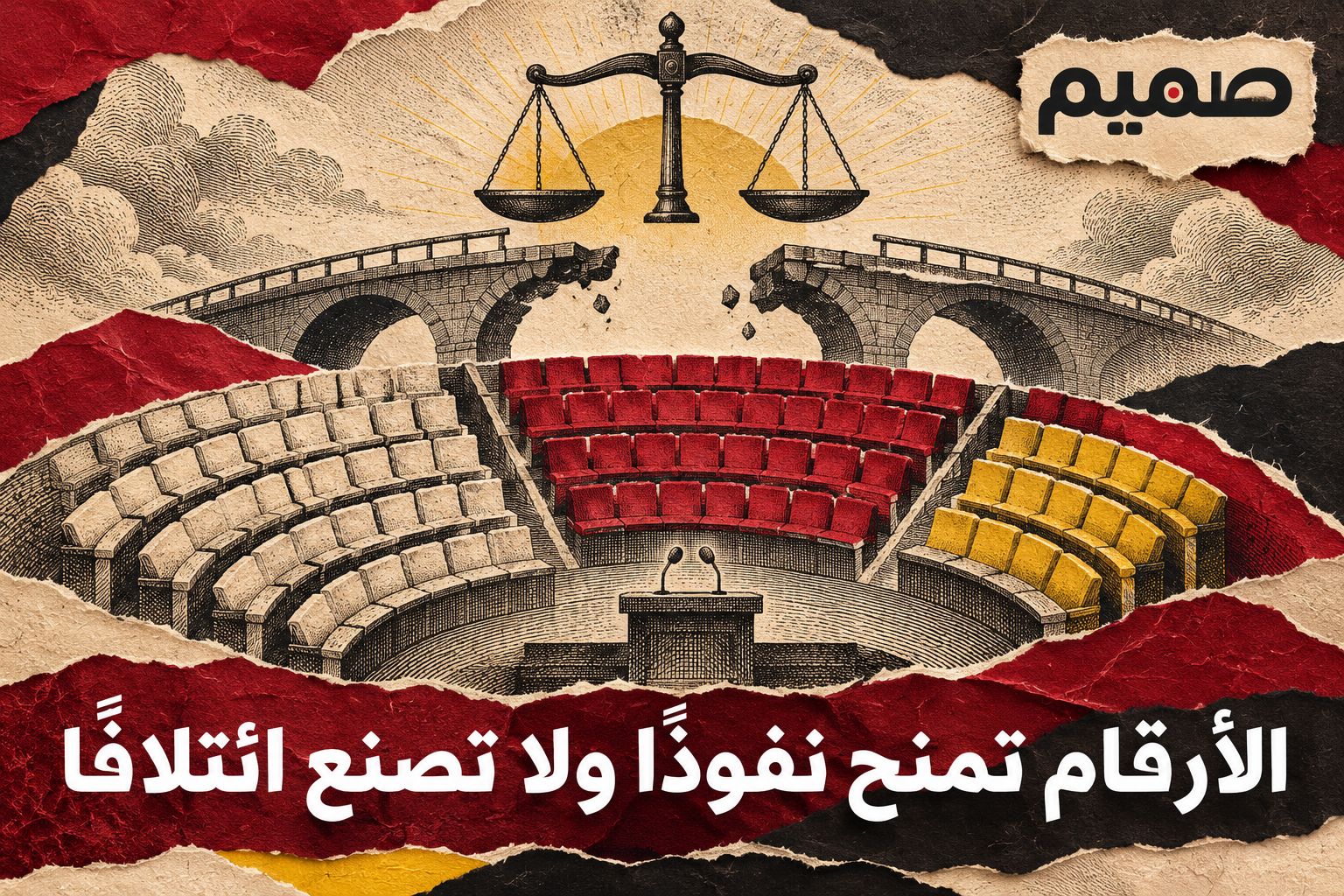
Eisenkot’s Yashar party prioritizes security and reform of state institutions; Naftali Bennett and Avigdor Liberman belong to a nationalist right that rejects reliance on Arab parties; and the Democrats are more open to a civic partnership with them. The Joint List and the United Arab List, Ra’am, agree on ending far-right rule, but differ over the limits and conditions of participation.
The numbers unite them in voting on the identity of the government, but not necessarily in the first test over the budget, war or conscription. The Eisenkot bloc’s victory in the Knesset speakership on November 17 showed that the negative majority opposed to Netanyahu can produce institutional results. Parties in this bloc also secured the chairs of important parliamentary committees, giving them the ability to set the legislative and oversight agenda even before a government is formed.
But Reuters stressed that the core bloc remains at 48 seats and that the nineteen Arab lawmakers are potential allies, not a confirmed part of the coalition. Control of parliament is therefore leverage, not a stable substitute for a government capable of passing a budget and taking decisions on war. [5]
Palestinians Inside Israel: Between Swing Power and the Ceiling of Conditions
The Arab gains did not come from nowhere. The Associated Press estimated voter turnout in Arab towns at about 77%, compared with 53% in the previous election, linking the increase to a sense of discrimination, worsening crime, lack of services and fear of the outgoing government’s policies.
These figures concern the October 27 election and do not describe a fixed position for every Palestinian inside Israel, but they show that political mobilization turned a long-marginalized social bloc into a parliamentary force that cannot be bypassed arithmetically. [6] Yet converting this power into policy faces two ceilings.
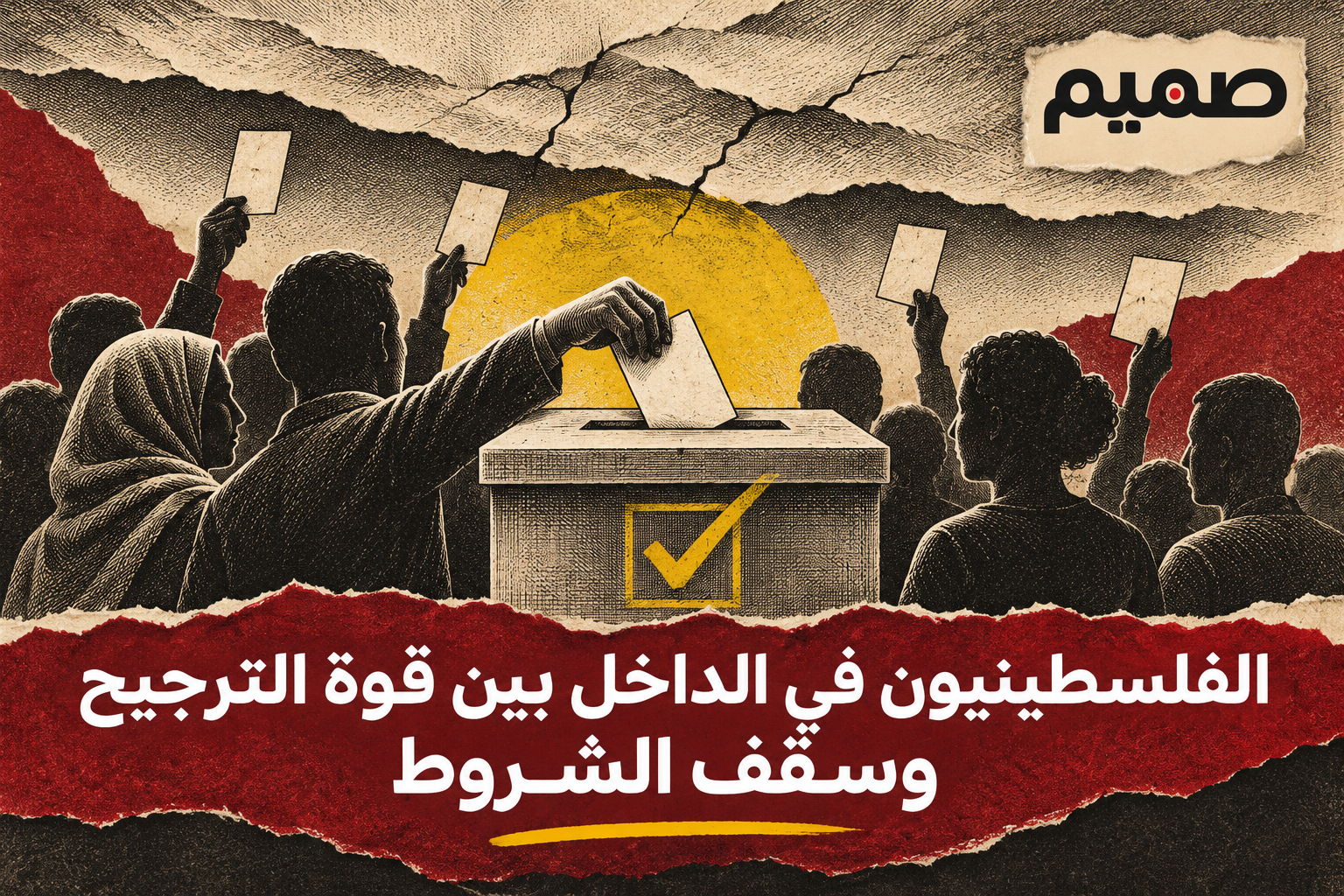
The first is the conditions Eisenkot set for any Arab partnership, including accepting the definition of Israel as a Jewish state and designating Hamas as a terrorist organization—conditions that touch the Joint List’s identity and its program concerning a Palestinian state. The second is Liberman’s and other allies’ rejection of a government dependent on Arab support from inside or outside the coalition.
Eisenkot may therefore ask Arab lawmakers to save his government without giving them an agreement that guarantees their priorities: they would bear the cost of supporting it while his Jewish partners retain a veto. A difficult Palestinian trade-off emerges here. Abstaining or voting for a minority government could remove ministers associated with settlement expansion and intensified repression, and make it possible to secure budgets and plans to combat crime in Arab society.
But it could give a government led by a former general civic cover without a commitment to end the war or recognize Palestinian national rights. Defeating the attempt, meanwhile, could return the mandate to Netanyahu or lead to new elections; the right would then accuse the Arab parties of prolonging the crisis, even though the refusal to integrate them is one of its causes.
Changing the Ruler Does Not Mean Changing the Structure of the Conflict
The argument in Eisenkot’s favor says ending Netanyahu’s rule is a gain in itself: a new government could restore judicial independence, open an official investigation into the failures of October 7, reduce the influence of the far-right religious camp, and temper incitement against Arab citizens. These would be genuine institutional gains if achieved, and could widen the space for dissent inside Israel and restrain some of the most extreme decisions.
Eisenkot’s condemnation of the campaign to delegitimize Arabs, as reported by The Guardian, marks a political and ethical difference from the rhetoric of Netanyahu and his allies. [7] But the available evidence does not support the conclusion that this difference will automatically carry over to the West Bank and Gaza. Eisenkot is a former chief of staff, his electoral rhetoric is national-security oriented, and his potential partners include right-wing figures opposed to a government dependent on Arabs.
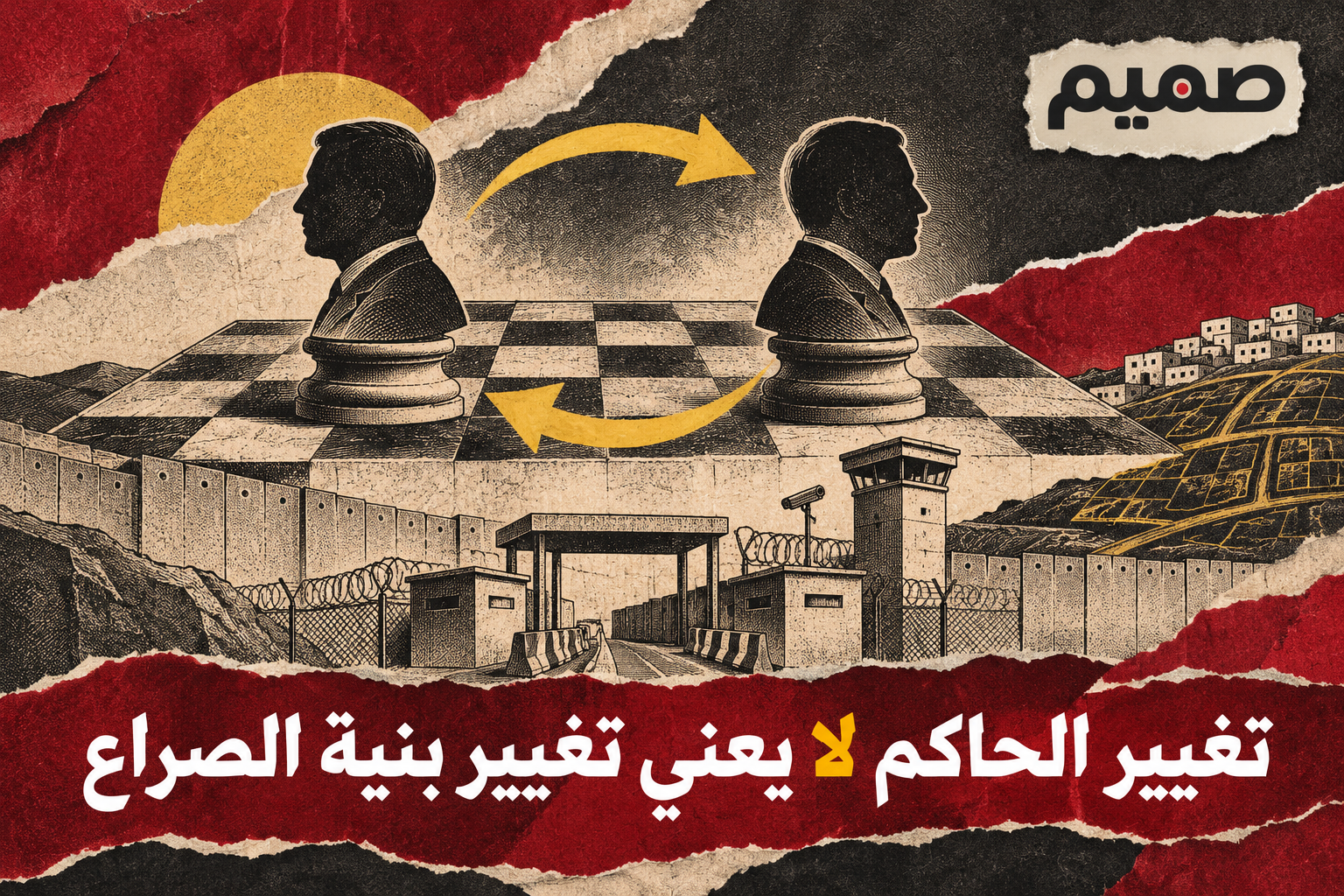
Al Jazeera also concluded that his accession could change the style of managing the conflict and alliances without implying a fundamental shift toward a Palestinian state or an end to Israeli security control. If his government is formed, the likeliest difference will lie in the tools, coalition and language before amounting to a reversal of the strategic objective. [2]
In Gaza, a new government could adjust the pace of decisions or negotiation mechanisms, but it would inherit an established military apparatus and conflicting political commitments. In the West Bank, halting settlements or settler violence requires executive decisions and confrontation with influential forces, not merely the departure of particular ministers.
Inside the Green Line, the direct impact is more measurable: municipal budgets, policing policies, recognition of villages and Arab representation in decision-making positions. A distinction must therefore be drawn between tangible relief from civic discrimination and a comprehensive national settlement; the first is possible within a centrist coalition, while the second does not appear in its declared programs.
Negotiators’ Interests Define the Limits of Concession
Eisenkot wants to turn the mandate into power before his image as an alternative erodes, but he must bring together disparate parties. His interest is to keep three doors open: the Haredim, part of Likud, or Arab support for a minority government. Each door carries a price.
The Haredim seek to protect the exemption from conscription; Likud wants Netanyahu’s influence preserved or a rotation agreement; and the Arab lists need civic and political achievements that keep them from appearing as a free lever for a government that does not recognize their voters’ demands. Netanyahu’s interest, meanwhile, is not necessarily to form a government immediately, but to prevent his rival from doing so.
Remaining head of a caretaker government allows him to manage security affairs, while he uses the prospect of reliance on Arabs to break up Eisenkot’s bloc and recover right-wing votes. He has repeatedly called for a unity government and described an Arab-backed government as a danger to Israel, although he negotiated with Ra’am in 2021.
This contradiction is understandable as a negotiating tool: legitimizing Arab support when it benefits him and criminalizing it when it gives his rival a majority. [1] According to Al-Araby Al-Jadeed’s account of the Israeli press, a Likud official raised the possibility of a rotation beginning with Eisenkot and putting Netanyahu second. The proposal ostensibly addresses the numerical deadlock, but it clashes with the opposition of Liberman and Yair Golan and their doubts that Netanyahu would honor agreements.
It would also reproduce Netanyahu’s centrality rather than end it, and could push the Arab lists into opposition after their votes provided the opportunity for change. A broad unity government therefore appears numerically stable, but contains the seed of political and moral fragmentation within the camp elected to remove Netanyahu. [3] The Haredim also hold swing power, but the conscription issue makes a deal with them difficult.
Eisenkot and his partners presented equal military or civilian service as part of their program, while religious parties regard the exemption as a core interest of their public. Any major concession could fracture the change bloc; any hard line could drive the Haredim back into Netanyahu’s arms.
The next government is thus not determined by the position on Palestinians alone, but by the intersection of their issue with struggles over identity, religion, the judiciary and the distribution of the burdens of war within Israeli society.
The Chain of Impact From the Knesset to the West Bank and Gaza
If Eisenkot succeeds, the Palestinian impact begins with the coalition’s composition, not its name. A minority government dependent on the Joint List’s abstention or Ra’am’s support would need repeated understandings to pass the budget. This gives Arab lawmakers leverage on civic issues, but leaves the government vulnerable to pressure from its right wing whenever the West Bank or Gaza is raised.
The leadership may choose to avoid collapse by separating the two tracks: providing resources to Arab towns while maintaining a hard-line security policy outside the 1948 borders. A unity government between Yashar and Likud would be broader and better able to pass decisions, but Palestinians could lose their swing vote within it. The parties could agree on limited institutional reform and postpone disputed issues while policies on the ground continue through inertia.
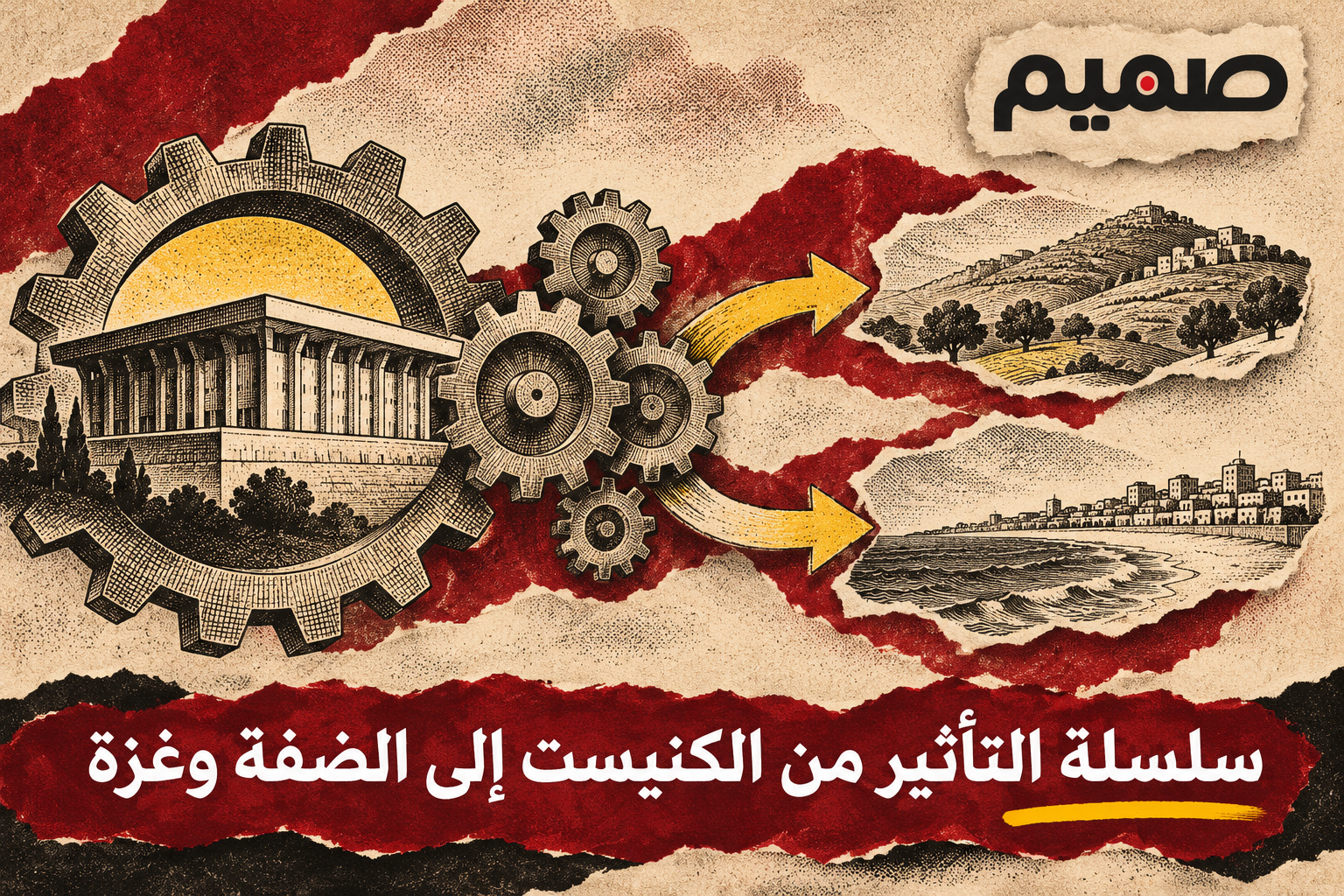
Likud’s presence would protect part of the previous government’s legacy, while Eisenkot’s presence would give it language more acceptable internationally. The danger is that external rhetoric improves without a corresponding change in settlements, restrictions or military operations. If government formation fails, Netanyahu remains head of the caretaker government until Herzog mandates another candidate or constitutional paths are exhausted and new elections are held.
This period is not a neutral vacuum; the transitional government retains control of the military and security agencies, as Al Jazeera noted. A prolonged deadlock could encourage decisions on the ground that do not require new legislation, and allow every camp to use Gaza, the West Bank and Arab identity in an early election campaign. [2]
The Counterargument: Stability May Precede Transformation
Supporters of a broad government may object that demanding a fundamental shift on the Palestinian issue from its first day ignores the fragility of the political system. Under this argument, the priority is to end a prolonged transitional government, prevent a sixth election in a few years and restore regularity to institutions; calmer understandings over Gaza and the West Bank can then be built.
Involving right-wing or religious forces may also be the necessary price for removing the far right from executive positions, a relative improvement even if it does not achieve a settlement. The argument deserves serious consideration, but assumes that delay does not create new facts. Settlements, violence and administrative restrictions accumulate daily, and a stable government could become cover for their continuation unless its agreement contains measurable red lines.
The experience of broad coalitions also shows that disputed issues are not automatically resolved; they are often frozen, while the state apparatus continues operating under existing policies. Stability has value, but it is not a substitute for policy content or a guarantee of protection for Palestinians.
The most appropriate standard is therefore not the degree of optimism or hostility toward Eisenkot personally, but the first decisions that reveal the government’s direction: does it halt funding or permits that expand settlements? Does it change the rules governing the use of force and settler protection? Does it allow aid and reconstruction supplies into Gaza? Does it address crime and discrimination in Arab towns through specified budgets?
The answers to these questions distinguish genuine institutional transformation from a mere change in the governing elite.
Three Paths and the Conditions for Testing Them
The first scenario is a minority government led by Eisenkot with outside Arab support. Its condition is that he retain the votes of the parties in his bloc or prevent a decisive rebellion, and that Ra’am and the Joint List agree to tactical coordination without a comprehensive agreement. Its potential effect is to reduce far-right influence and open the door to civic gains for Arabs, in exchange for acute fragility over security and the budget.
The two clearest indicators are the timing of a confidence vote before December 6, and Liberman’s and Bennett’s public position on voting or abstaining. The second scenario is a unity government between Eisenkot and Likud, perhaps with a rotation or with Netanyahu removed from the forefront. Its condition is that Likud abandon its more extreme allies and that Eisenkot’s partners accept an agreement they had rejected.
It would be more stable numerically, but could preserve the core policies toward Palestinians and limit itself to changing language and management. The identity of the prime minister in the first phase and the text of the basic guidelines on settlements, Gaza and the October 7 commission of inquiry should be monitored. The third scenario is failure of the mandate and a return to a new round of bargaining or elections.
This would occur if the Haredim, Likud or Arab support cannot be assembled, or if the 48-seat bloc breaks apart in the vote. Its effect would be the continuation of Netanyahu’s caretaker government and escalating incitement against Arabs, with economic and social decisions postponed. The two indicators are whether Eisenkot requests a fourteen-day extension of the mandate, and whether Herzog transfers the mandate to another candidate or early-election procedures begin.
No path can now be predicted with certainty; party negotiations are opaque, and some published information is attributed to leaks or anonymous political sources. Party platforms also do not specify their future decisions in Gaza and the West Bank, and electoral data describe the October 27 moment but do not guarantee the stability of alliances.
This analysis therefore treats the announced figures as facts and presents the assessment of the Palestinian impact as a conclusion conditional on the government’s composition, written agreement and executive conduct. The conclusion is that the election broke Netanyahu’s monopoly on a majority, but has not yet broken the structure that makes the Palestinian vote necessary in the arithmetic and rejected in legitimacy.
The test is not whether Eisenkot will use Arab seats to reach power, but whether he will accept turning them into a political partnership with rights and declared trade-offs. Over the next two weeks, the form of the confidence vote, coalition agreements, the position of Arab parties and the first decisions in the West Bank and Gaza will reveal whether the change is a transfer of power or a rearrangement of the same tools.