Gaza Between One Crossing and Two Gaps: Why Relief Funding Is Not Enough
On November 17, the World Food Programme warned of a funding gap exceeding 400 million dollars over six months, while tents and winter equipment await permission to enter Gaza. The crisis shows that money alone does not deliver relief when crossings, roads, and equipment remain restricted. How do the funding gap and the access bottleneck interact, and which indicators will determine the course of the winter?
On November 17, 2026, a joint statement by the World Food Programme and the International Organization for Migration revealed that the programme faces a funding gap of 436 million dollars over six months to support two million people in Palestine.
In the same statement, pumps, spare parts, fuel, machinery, and timber remained among the materials facing delays or restrictions on entry into Gaza. Two distinct obstacles converge here: money is needed, and paying for materials is not enough to ensure that they reach those who need them [7].
This brings the central question for winter into focus: what is funding worth if it does not become, in time, a tent, a pump, fuel, and a meal delivered to the place where they are needed?
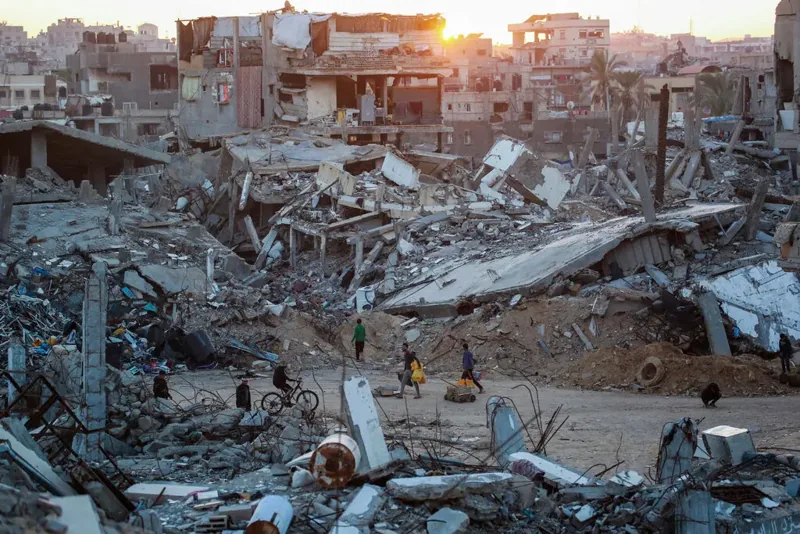
The importance of the question is that Gaza does not face a single shortage that an additional shipment can remedy. Rain hits crowded displacement camps, sewage mixes with floodwater, food assistance contracts, hospitals operate only partially, and purchasing power has almost collapsed. Each constraint drives the next: a weak tent increases illness; illness raises demand for scarce medicine; a broken pump contaminates water; and a missed meal weakens a child’s ability to resist infection.
When a Tent Becomes a Matter of Access
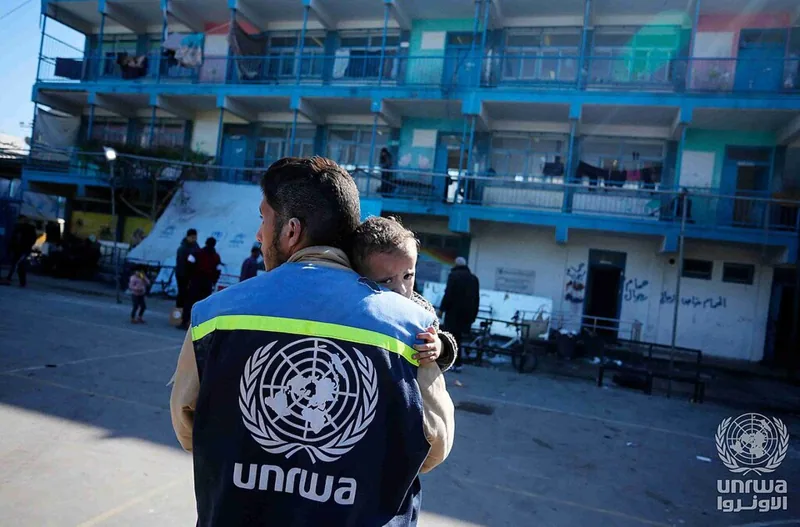
The World Food Programme says two thirds of Gaza’s population face acute hunger and about 100 thousand women and children suffer from malnutrition. It has had to reduce monthly assistance for half a million people. In camps that used to receive a hot meal every day, the meal is now provided every other day, while some families may wait three or four months between food parcels [1].

These facts describe a decline in coverage, not merely a temporary operational difficulty.
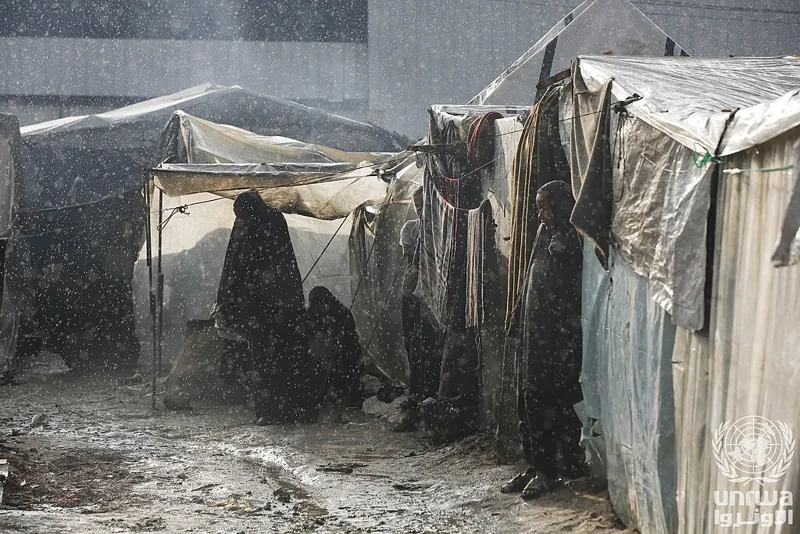
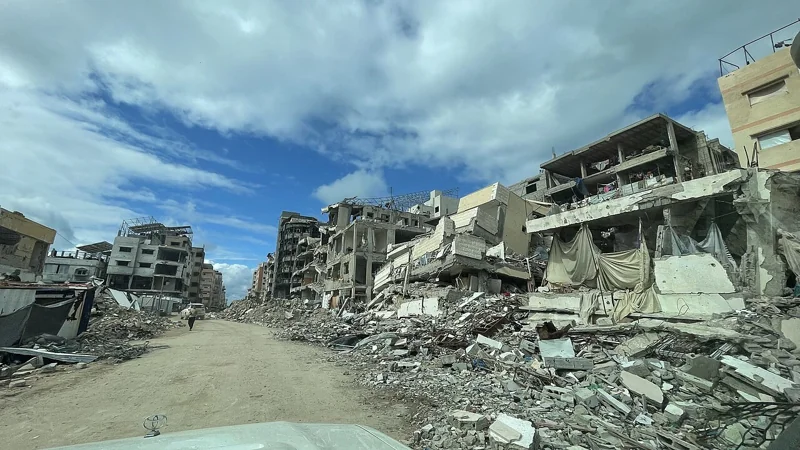
The rain turned this decline into a compound shock. The United Nations Office for the Coordination of Humanitarian Affairs reported initial notifications indicating that more than 46 thousand families may have been affected by the rain. They indicate that more than 40 thousand family shelters had been damaged as of November 9, with the caveat that damage estimates were not yet confirmed. Floodwater contaminated by sewage and disruption to health and education services and facilities were recorded [3].
The danger, then, comes not from lower temperatures alone, but from the combination of wet conditions, crowding, malnutrition, and reduced care.
On November 13, Al Jazeera quoted UN Under-Secretary-General for Humanitarian Affairs Tom Fletcher as saying that 150 thousand family tents were waiting outside Gaza. This is a figure attributed to a UN official on a specific date, not a count of everything that subsequently entered or of all shelter needs. But it puts the question where it belongs: why do materials remain close to the border yet far from families? [6]
The existence of stock outside the Strip does not prove that its volume is sufficient or that every item is suitable, but it illustrates the difference between possessing relief materials and being able to turn them into actual shelter before the storm.
One Crossing Multiplies the Bottleneck
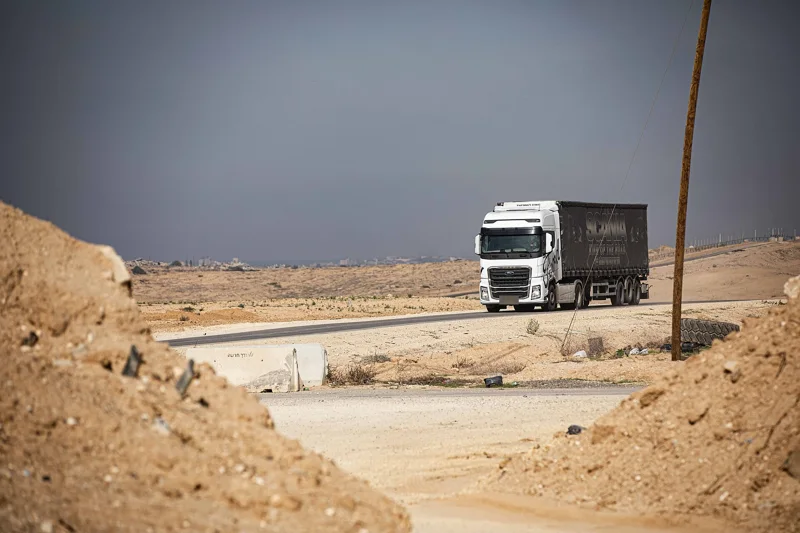
When the flow of aid and commercial goods depends on Kerem Shalom as the only authorized entry point, a disruption at one location becomes a disruption across the entire network. The cost is not limited to the number of trucks. It includes inspection time, unloading space, storage capacity, the distance to northern Gaza, road conditions, fuel, vehicles, and permitted hours of movement. Any tightening in one link reduces the productivity of those that follow.
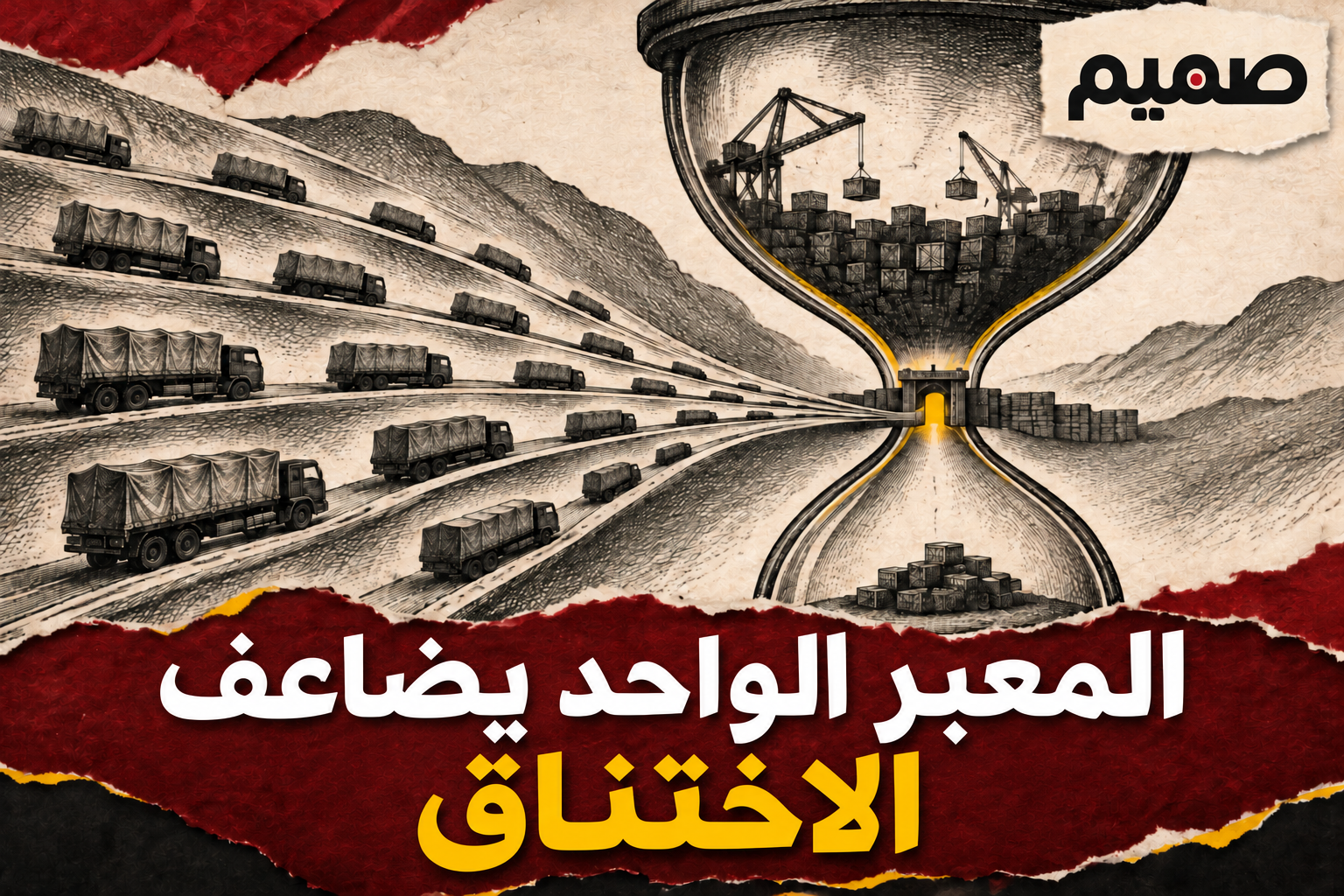
The joint statement confirms that Kerem Shalom is the only authorized entry point for humanitarian and commercial goods, not the only crossing for any movement of people [7].
OCHA recorded that 262 UN and partner trucks were listed for entry between November 2 and 8, and that 228 of them were unloaded on the Israeli side of Kerem Shalom, a decline of about 42% from the previous week. The report linked the decline mainly to the Israeli authorities’ suspension of the Egyptian route, from which no trucks were unloaded between November 3 and 8, citing smuggling concerns attributed to those authorities, as well as a decline in available aid volumes because of funding [3].
Unloading at the border is not final delivery; the cargo still has to be received, transported, sorted, and distributed amid damaged roads and movement restrictions.
This explains why counting trucks can be misleading. A truckload of blankets does not replace a water pump, a shipment of flour is no substitute for a bulldozer, and medicine without refrigeration may lose its value. The more accurate measure is the mix: did materials matching the need enter? How long did approval take? Did they reach the warehouse and then the family? Could they be put into operation? Four figures should therefore be separated: approvals, unloading, receipt inside Gaza, and final distribution.
At its November 17 meeting, the Palestinian Cabinet warned that obstruction of aid and basic necessities entering Gaza was continuing, linking it to worsening hunger and food insecurity for about two million Palestinians [2]. This position gives access political and legal weight, but it also raises a management question: even with wider opening, are transport, storage, and distribution mechanisms able to absorb a rapid increase after years of infrastructure destruction?
Funding Without an Outlet Does Not Become Relief
The first gap is financial. The joint statement puts the World Food Programme’s need at 436 million dollars over six months and the International Organization for Migration’s need to sustain the shelter response at 173 million dollars. These sums concern different programmes and scopes and are not shares that can automatically be added into a single bill; the programme’s figure also covers Palestine, not Gaza alone [7].
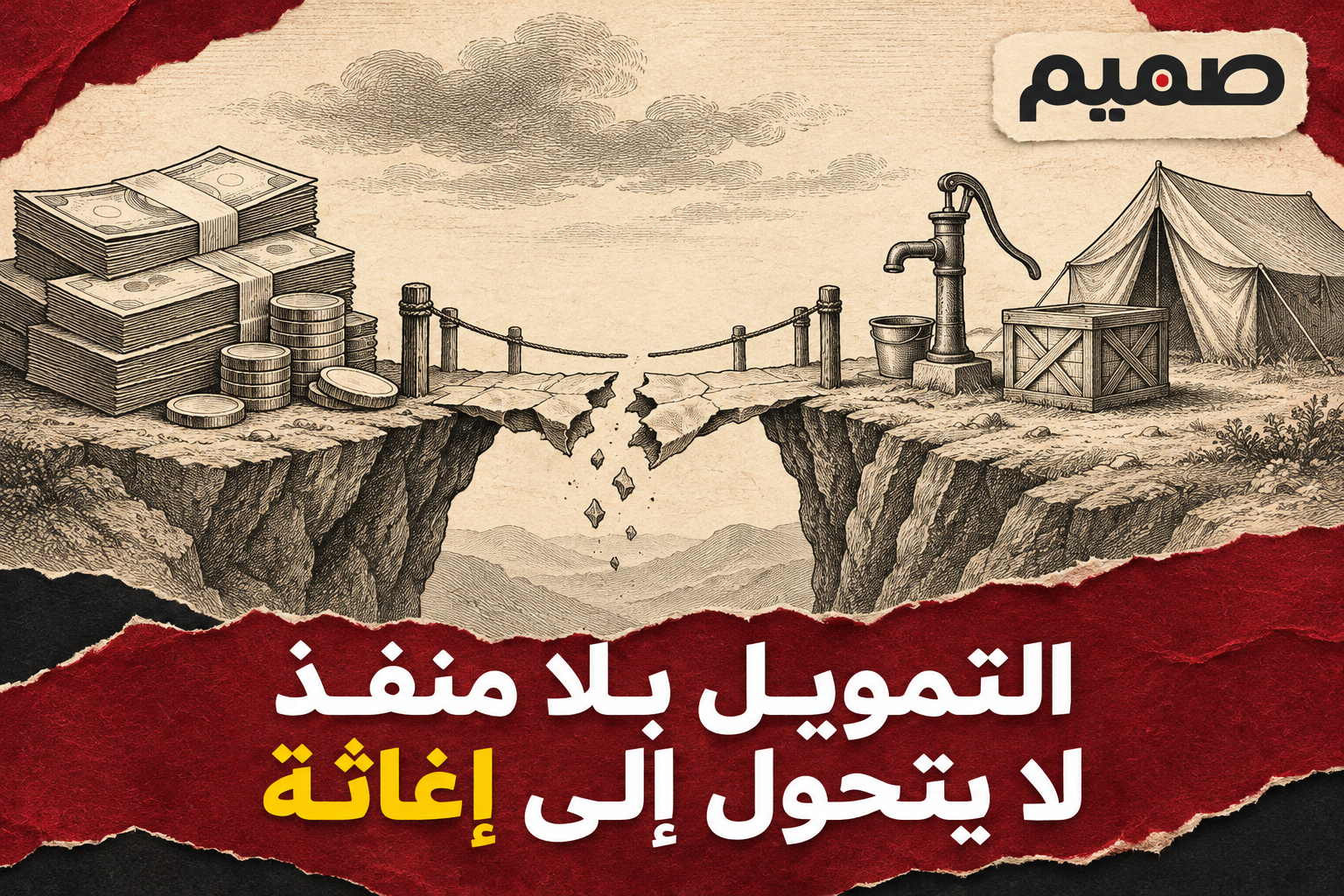
Adding them into one figure would create a false impression of a unified bill, while the reality is a set of interconnected programmes, each with its own budget and scope.
The second gap is material and political: money does not open a crossing, shorten a security inspection, or automatically allow the entry of a material classified as sensitive. A donor may fund the purchase of a pump, but its effect does not reach the family in need while it remains in a warehouse outside the Strip. A tent may enter, but its benefit declines if it arrives after the storm or remains out of reach for families in the north.
The access gap also has an operational dimension inside Gaza. Distributing assistance requires functioning trucks, fuel, roads, communications, staff, warehouses, and safe delivery points. When these elements are damaged, the cost of each distributed tonne rises, and a larger share of funding goes to keeping the network operating rather than increasing the household’s share.
This does not mean administrative costs are waste; logistics are what turn a commodity into a benefit, but they become more expensive as access narrows.
There is also an effect on the market. If restrictions prevent commercial goods from entering in sufficient quantities, humanitarian assistance becomes a principal source of supply rather than a last-resort safety net. Any funding cut then causes a direct shortage rather than enabling a beneficiary to turn to a nearby shop.
Cash assistance becomes less effective if goods are scarce or expensive, while in-kind baskets lose diversity when protein foods, vegetables, and fuel are unavailable.
From Food to Health: One Chain of Harm
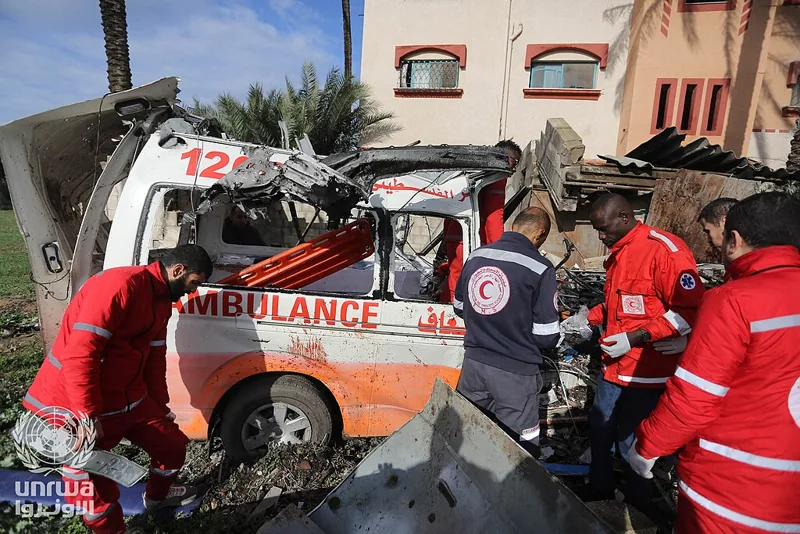
World Health Organization data show that 19 of 36 hospitals were partially operational in September, with no hospital operating at full capacity. Essential medicines, tests, equipment, and fuel also remained in severe shortage, while tens of thousands needed specialized treatment unavailable locally [4].
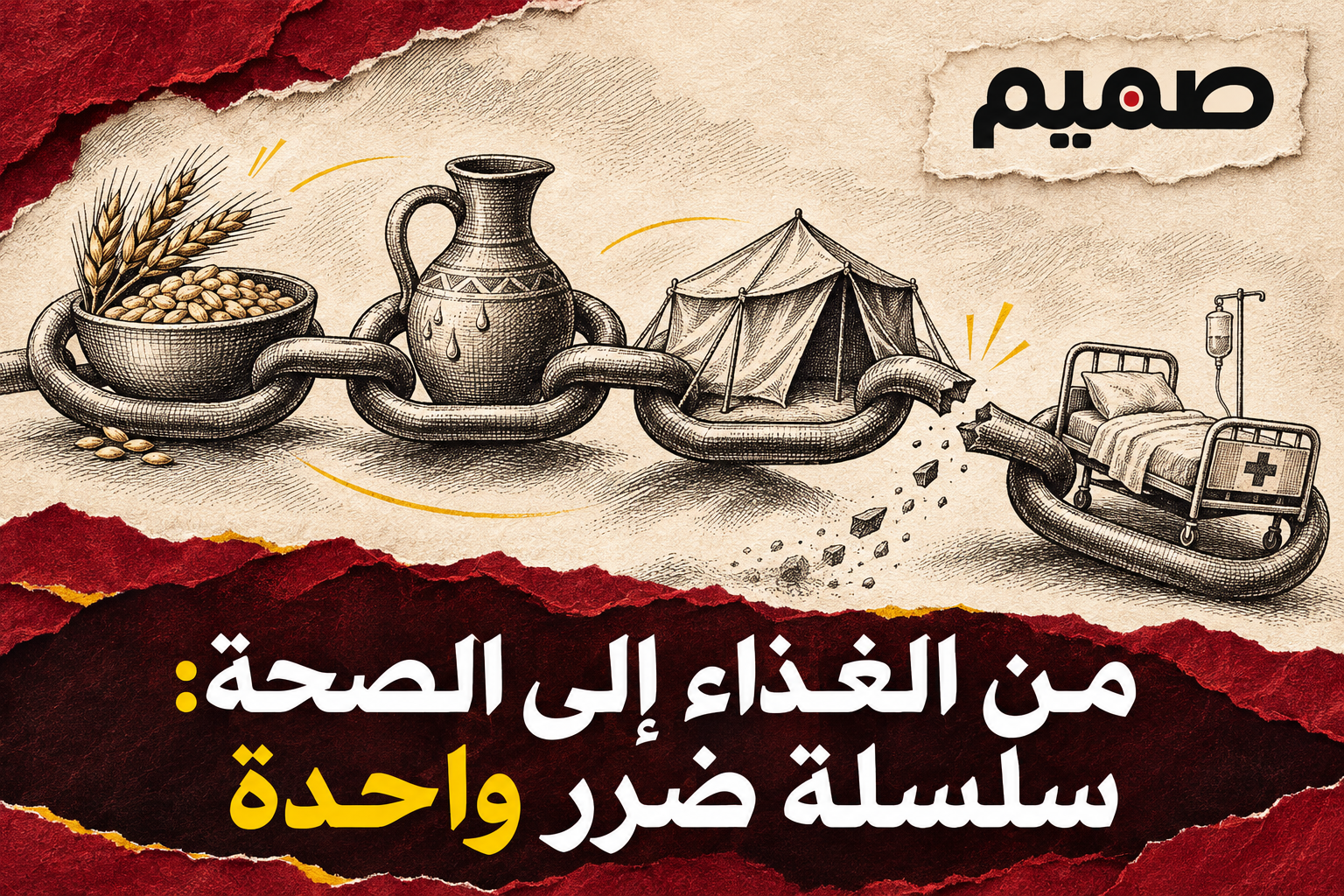
These figures predate the November storm, so they do not by themselves describe the current situation, but they show the system’s fragility before the cold and flooding.
OCHA adds that 42% of essential medicines were at stockout level in October, and that 85% of monitored households experienced moderate or severe water insecurity. A total of 66% of households reported receiving less than the minimum of six liters of drinking water per person per day [3].
When floodwater mixes with sewage, shortages of clean water, medicine, and laboratory capacity become one chain rather than separate files.
In its winter-preparedness appeal published in September, the United Nations Children’s Fund (UNICEF) adds that infants, young children, and people with pre-existing health conditions are more vulnerable to hypothermia, respiratory infections, and waterborne diseases. It cited reports that at least 11 children died from hypothermia last winter; this figure must not be presented as a toll for the current winter [5].
The shelter response should therefore also be measured by its capacity to protect health, food, and water, not by the number of tents alone.
In its report published on November 12, Al Jazeera quoted the father of nine-month-old infant Kinan Ahmad Ariqiq as saying that his child died from the cold inside the tent. This is testimony attributed to the father, not, in this analysis, an independent medical diagnosis or a comprehensive death toll [8].
This testimony is sufficient to show what weak protection means for one family, but it does not replace medical data when estimating the scale of risk to the population. The distinction between recounting a humanitarian case and constructing a health indicator suitable for monitoring the response is important.
The Counterargument: Partial Improvement Cannot Be Ignored
A counterargument may hold that the continued entry of shipments and the presence of goods in markets mean the route is working, albeit with difficulty, and that closing the funding gap and improving coordination are more immediately feasible than redesigning the crossing system. The joint statement acknowledges a fragile improvement in food security; the situation therefore should not be reduced to a complete halt in assistance, nor should what aid has achieved for people be ignored [7].
This argument captures an important point, but it does not by itself answer the question of sustainability. The statement itself attributes the improvement mainly to humanitarian assistance, not to a recovery of livelihoods, markets, and local food systems. When improvement depends on a threatened external flow, the effect of aid is a reason to preserve it, not evidence that it can safely be reduced [7].
The presence of goods in a shop does not mean people can afford them. Widespread unemployment and loss of income mean the market works only for those who have cash. Average availability may also conceal a geographic gap between south and north, or a qualitative gap between flour and a varied diet. Monitoring must therefore combine the price of the basket, income, dietary-diversity rates, and meal frequency rather than relying on images of stocked shelves.
The claim that tents and supplies are already entering also requires a standard of adequacy. If a shipment arrives a week after a flood or in numbers far below the shelters damaged, it is useful but does not disprove the bottleneck. If tents are allowed in while restrictions on pumps, spare parts, and fuel continue, the response remains incomplete because water cannot be drained, roads cannot be cleared, and services cannot continue.
What Can Change Before the Next Storm?
The first priority is to open multiple simultaneous routes rather than increase pressure on one point. Distributing entry between the south and north reduces transport distance, risk, and cost and gives the network backup capacity if a crossing is disrupted. Daily data should distinguish humanitarian from commercial materials and approved, unloaded, received, and distributed trucks so that figures do not become an argument without a standard.
The second priority is a clear, pre-approved list of winter, water, sanitation, and health materials, with defined decision deadlines. Pumps, oils, spare parts, and machinery are not secondary items; they are assets that enable dozens of services. Pre-approval of specified categories reduces time lost reviewing every shipment, while destinations and use can still be verified without leaving equipment stranded until the season ends.
The third priority is flexible funding that protects shared functions. Organizations need to buy food, but they also need transport, engineering, site management, and information. Funding restricted to one basket may leave a fuel or drainage gap that prevents the basket from being used. It would therefore help to allocate part of the funds to a rapid operational facility that addresses bottlenecks appearing within days, with public oversight of spending and results.
The fourth priority is to restore space for the local market without turning assistance into a permanent substitute. The entry of commercial goods, support for bakeries, farmers, and small workshops, and repair of roads and warehouses all reduce the burden on relief. But this transition must be gradual; withdrawing food baskets before income and production recover will push families into hunger even if some shops are full.
Three Winter Paths
The first path is conditional operational relief. It would materialize if additional crossings opened, approvals for winter equipment accelerated, and the core funding gap was closed. Its expected effect would be greater distribution, shorter travel time to the north, and stronger protection for shelter, food, and water. Its two indicators are an increase in shipments actually received and distributed for four consecutive weeks and shorter approval and entry times for sensitive materials such as pumps and fuel.
The second path is fragile stability. It would continue if reliance on one crossing remained, approvals improved only modestly, and funding stayed below stated needs. Aid would arrive but remain below need, and trade-offs among meals, shelter, and health would continue. Its two indicators are hot meals remaining available every other day or a decline in beneficiary numbers, and a persistent large gap between damaged shelters and materials reaching families.
The third path is dual pressure. It becomes more likely if funding declines further and closures or storms recur while equipment restrictions continue. Its effects would include rising illness, malnutrition, and prices; damage to household stocks; and increased displacement into a smaller area. Its two indicators are rising cases of hypothermia and waterborne disease, and a decline in weekly shipment volumes alongside an increase in families affected by flooding.
These paths are neither probability percentages nor certain forecasts. Food funding may improve while shelter remains restricted, a route may open for days and then close, or goods may reach the south but be delayed in the north. The indicators must therefore be read as an interconnected set rather than searching for one figure that declares the response a success or failure.
What Winter Reveals
Winter does not create Gaza’s crisis from nothing; it reveals the structure of the crisis. When the protection provided by housing collapses and water and sanitation networks fail, weather becomes a test of policy, logistics, and funding at once. A tent outside the crossing is not shelter, a grant that cannot be converted into fuel and a pump is not a response, and a truck unloaded at the border is not a meal in a family’s hands.
The decisive indicators in the coming weeks are clear: the number of functioning crossings; entry times for winter materials; volumes of shipments received and distributed; meal frequency; prices of the food basket and fuel; medicine stockout rates; and cases of malnutrition and illness linked to water and cold. If they improve together, funding will have become protection.
If only some improve, Gaza will remain between two gaps: insufficient money, and access that prevents the available share from working.
References
[1] World Food Programme, “Hunger Crisis Looms as Winter Hits Gaza,” November 17, 2026.
[2] Palestinian News and Information Agency (WAFA), Cabinet warning over the obstruction of aid entry into Gaza, November 17, 2026.
[3] United Nations Office for the Coordination of Humanitarian Affairs, Humanitarian Situation Report, November 13, 2026.
[4] World Health Organization, Director-General’s remarks on humanitarian access and health in Gaza, September 24, 2026.
[5] UNICEF, funding appeal for the winter response to protect 540 thousand children in Gaza and the West Bank, September 17, 2026.
[6] Al Jazeera Net, “1.4 Million Threatened with Hunger in Gaza and 150 Thousand Tents Waiting Outside,” November 13, 2026.
[7] World Food Programme and International Organization for Migration, joint statement on shortages of food, shelter, funding, and access, November 17, 2026.
[8] Al Jazeera Net, “Cold Claims Infant Kinan’s Life… His Father Recounts the Tragedy to Al Jazeera,” November 12, 2026.