The Incursion West of the “Yellow Line”: Will Gaza’s Ceasefire Turn Into a Moving Boundary?
The brief Israeli ground operation in central Gaza exposed another path by which the ceasefire can erode: redefining it on the ground through limited incursions and repeatable movement restrictions. What do the actors want, and can the mediators prevent the “Yellow Line” from changing from a withdrawal boundary into a permanent instrument of pressure?
A Brief Operation Reveals a Larger Question
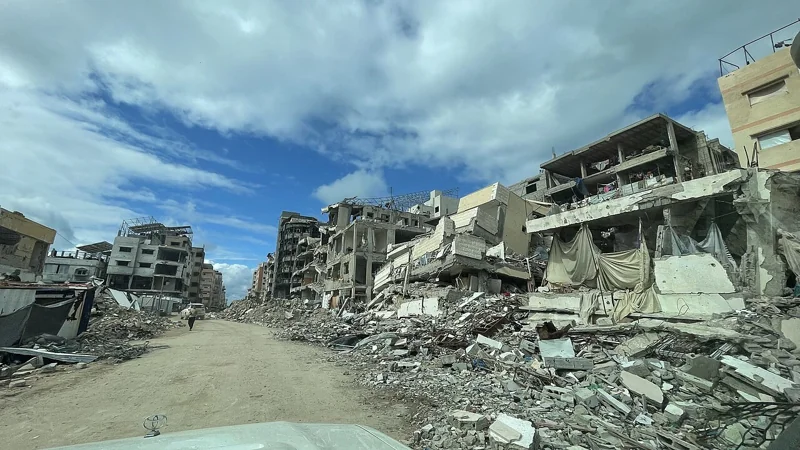
For about one day, Israeli tanks moved west of the “Yellow Line” in the central Gaza Strip. Part of Salah al-Din Road was closed, and families were displaced from the vicinity of Nuseirat and Bureij before the Israeli military announced that the operation had ended.
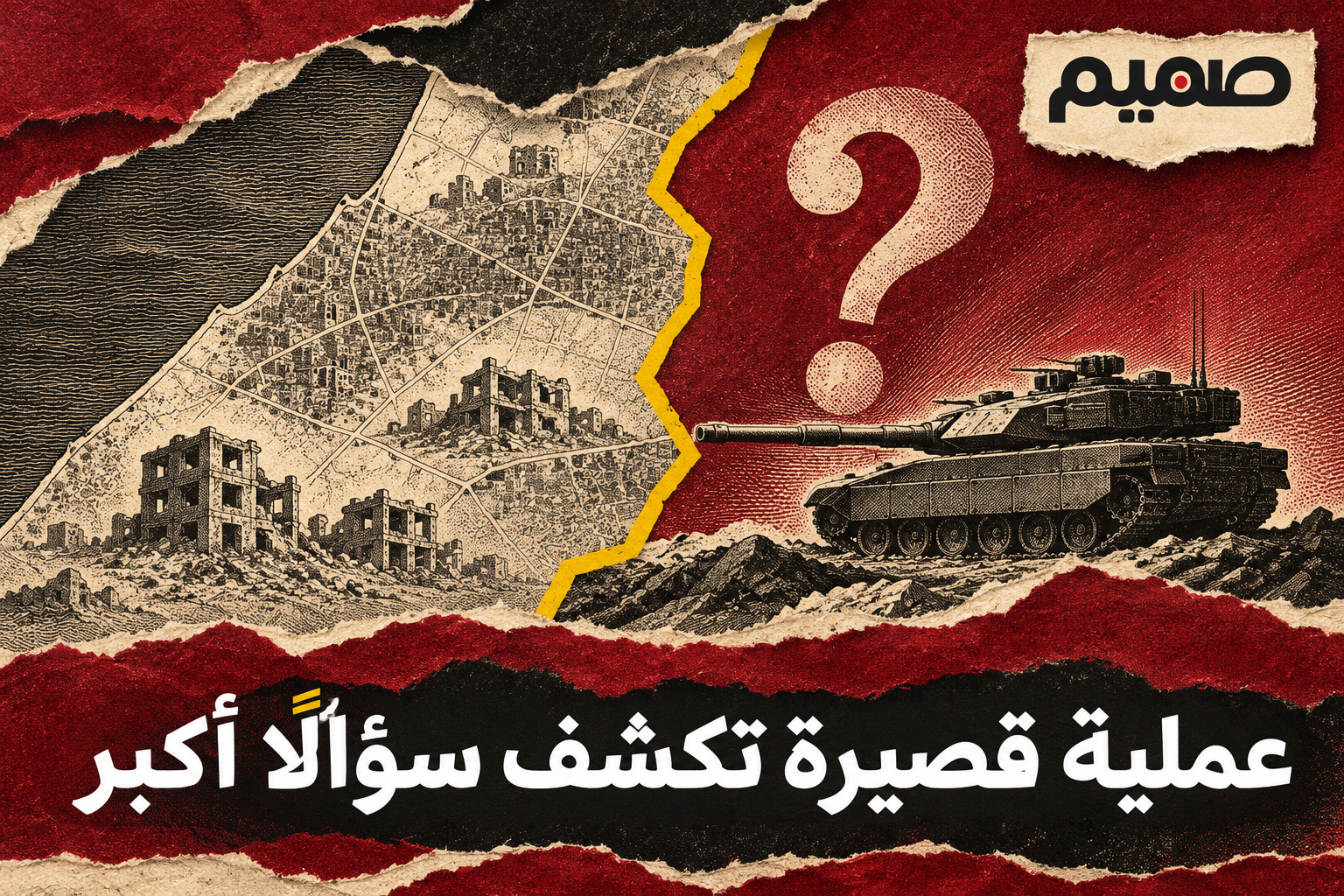
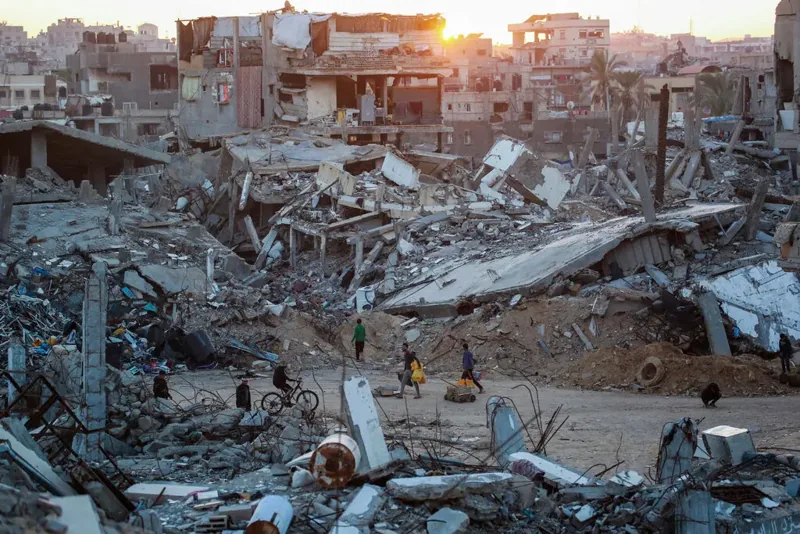
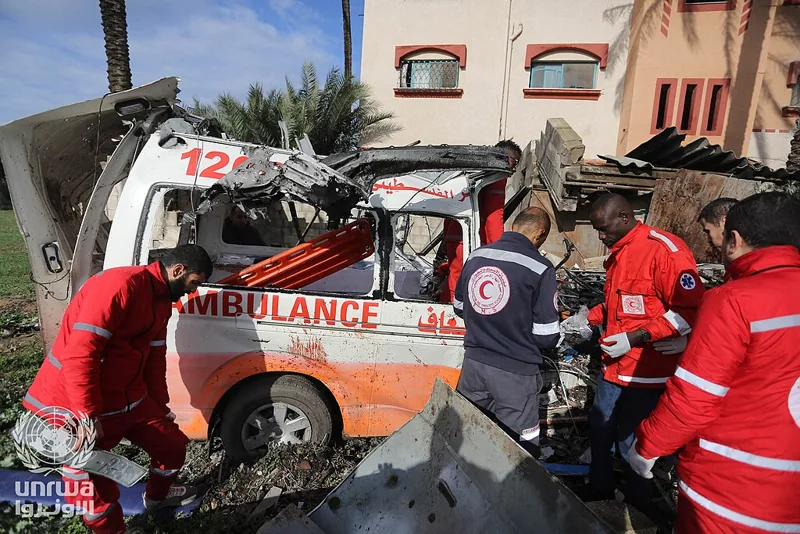
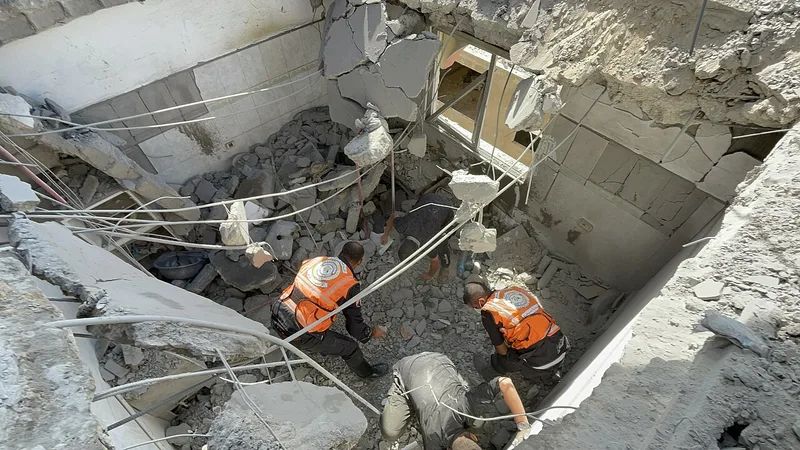
The military said the objective was to dismantle a tunnel suspected of being linked to Hamas; but the significance of the event cannot be measured by its duration alone. According to converging reports, this was the broadest publicly announced ground operation beyond the withdrawal line since the ceasefire began in October 2025. It was accompanied by demolitions and shelling, with casualties reported by medical and local sources. [1] [3] [4]
The central question, then, is not whether the tanks withdrew. It is whether the agreement still governs the conduct of force on the ground, or whether force has begun to reinterpret its boundaries through temporary facts that are difficult to prevent from recurring.
A ceasefire does not always collapse through a political declaration or a comprehensive attack. It may erode when the military exception becomes repeatable, and when warnings, evacuations and road closures become routine tools for managing an area that is supposed to lie outside Israeli deployment.
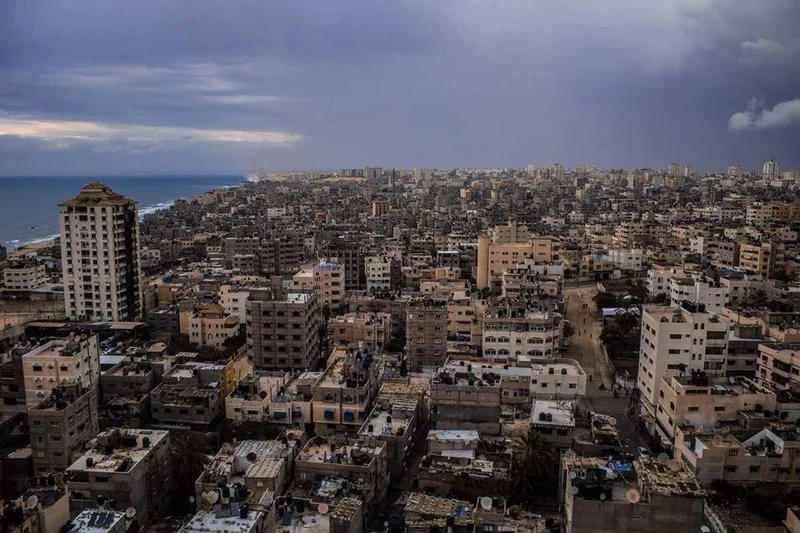
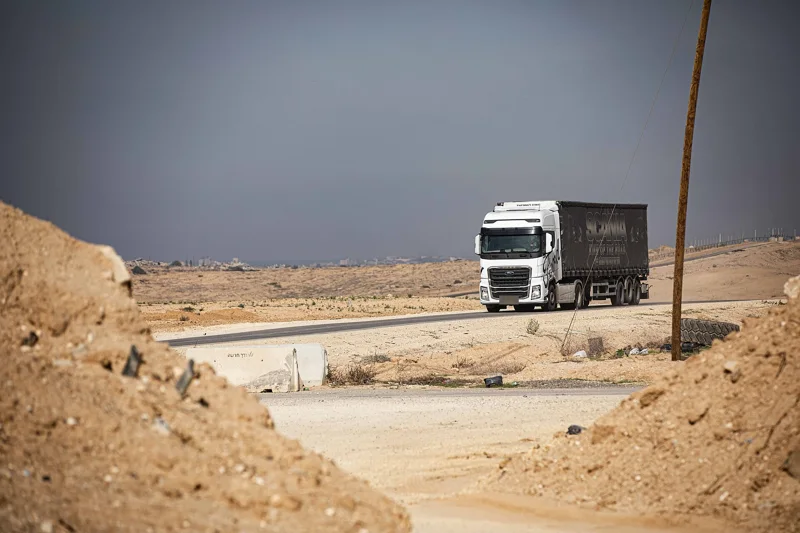
The issue carries added weight for Palestinians because the area of the incursion lies near a vital junction for movement between the north and south of the Strip. Approaching Salah al-Din Road means that the operation’s impact extends beyond the targeted square to the ability of residents, relief operations and markets to move.
The return of some residents after the withdrawal also does not erase fears of mines and unexploded ordnance, or of another incursion. Reuters recorded accounts from residents who remained away from the area even after the operation was declared over. [1]
The “Yellow Line”: From a Withdrawal Arrangement to a Domain of Negotiation by Force
The “Yellow Line” inside Gaza was established as the boundary of Israeli deployment after the first phase of the ceasefire agreement. Reporting indicates that the line effectively separated areas where the Israeli military remained from areas in which Palestinians were allowed to move. But boundaries that are not protected by a clear mechanism for verification and accountability remain vulnerable to being redrawn through military action, even if the official map does not change. [6] [8]
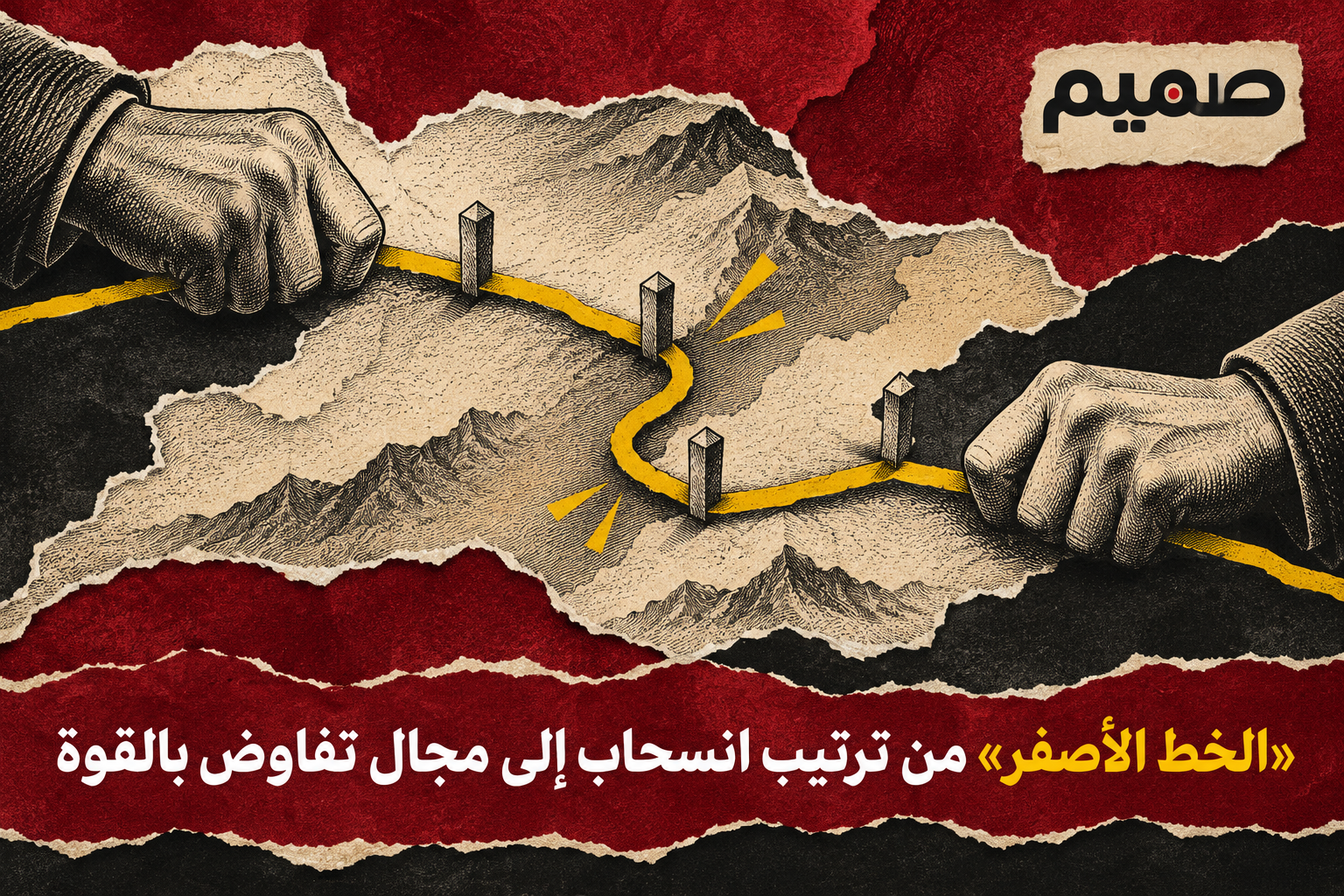
The latest operation reveals three layers of this shift. The first is security-related: Israel says it retains the right to act against military infrastructure that it views as a threat, even beyond the withdrawal line. The second is spatial: designating three squares, evacuating residents and closing a main road allows a military decision to suspend civilian rules within an area it selects unilaterally.
The third layer is political. If the operation passes without a tangible diplomatic cost, its operational success will not be limited to destroying an alleged target; it will also include establishing a precedent that allows the model to be repeated.
This is an analytical inference, not an established fact about a prior intention to change the boundaries. Open sources do not reveal Israeli intelligence assessments of the tunnel, the details of coordination preceding the operation, or the text of the rules of engagement agreed among the mediators and the parties. But the observed facts are sufficient to distinguish a fundamental difference between pursuing an urgent threat through a limited exceptional measure and the emergence of a practice in which exceptions expand until they become the rule.
The Actors’ Interests and the Limits of Their Capabilities
The Israeli government and military establishment seek to combine two partly conflicting objectives: preserving the framework of calm that reduced the cost of open war, and retaining freedom of action against what they consider emerging threats. From the Israeli perspective, the brief incursion may be presented as evidence that the agreement does not grant immunity to armed infrastructure.
From a Palestinian perspective, the same action appears to violate the withdrawal boundary and to impose a shifting security reality on the population. This contradiction in the definition of “compliance” is one of the agreement’s most dangerous gaps.
Hamas, for its part, has a clear interest in condemning the operation: accepting incursions without a political or negotiating response weakens its ability to claim that the agreement constrained Israeli deployment. But its options are also limited. A broad military response could give Israel a pretext to expand the operation and expose the population to another round of fighting, while limiting itself to protest could encourage repeated field tests. External mediation, rather than the local balance of power alone, therefore becomes part of the calculation of the response.
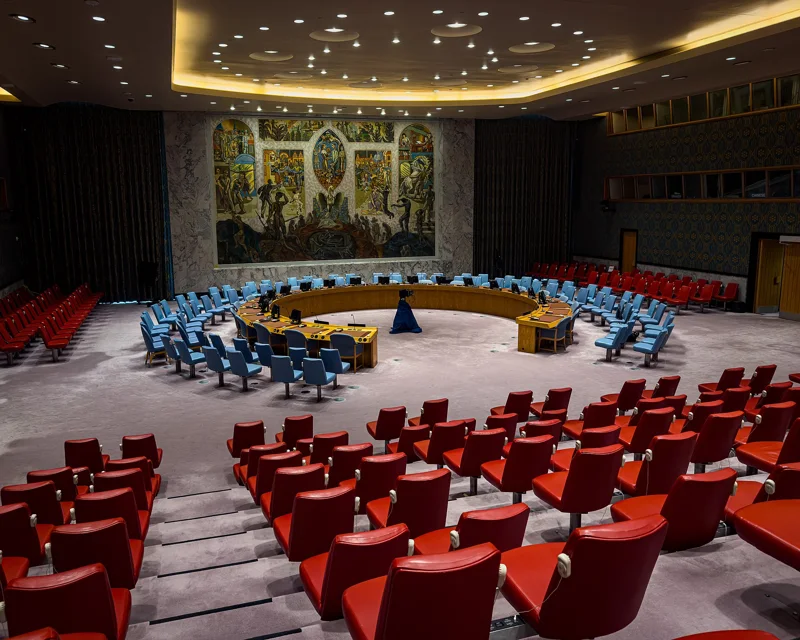
The mediators and the body overseeing the agreement face a different problem. A “Board of Peace” report submitted to the Security Council warned that the gap between what was agreed and what is happening on the ground is the principal danger to the process, and called for the full implementation of commitments. The warning came one day before the incursion, making the operation a direct test of the oversight structure’s ability to turn reports into practical constraints. [2]
Israeli domestic politics further complicates the calculations—not because it alone explains the operation, but because it increases the value that each camp places on displaying security resolve. The Guardian noted that the incursion came at a moment of Israeli political competition following inconclusive elections. [7]
The timing does not prove that the military decision was taken to serve a partisan side. But it is a reminder that a deterrence mechanism relying only on voluntary restraint will remain fragile when security hard-line positions become an asset in domestic competition.
The mediators, however, have limits: the United States does not want the collapse of an agreement it negotiated, while at the same time tending to preserve security latitude for Israel; regional parties want to prevent war and protect the flow of aid, but they do not possess means of enforcement on the ground by themselves. Unless mediation is translated into announced verification procedures and a rapid timetable for handling incidents, each party will continue using its own narrative to determine who violated the agreement first.
The Chain of Impact: From a Passing Tank to a Besieged Economy
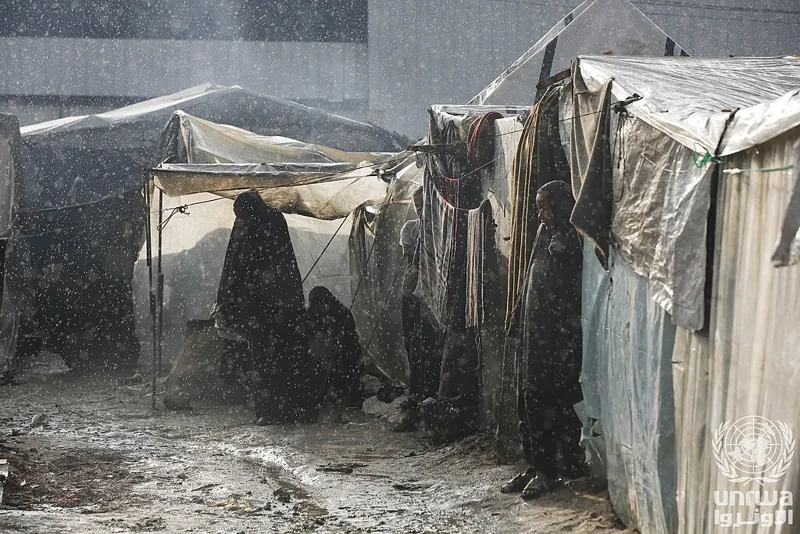
The operation’s direct harm is clear in the reports: the displacement of dozens of families, the demolition of homes and facilities, the temporary closure of a main road, and fear that kept some residents from returning. WAFA reported demolitions east of Maghazi and north of Nuseirat, while Al-Araby Al-Jadeed cited witnesses as saying the incursion lasted about 14 hours and left behind excavation work and the destruction of land near Wadi Gaza. Anadolu described the reopening of Salah al-Din Road after the operation ended. [4] [5] [6]
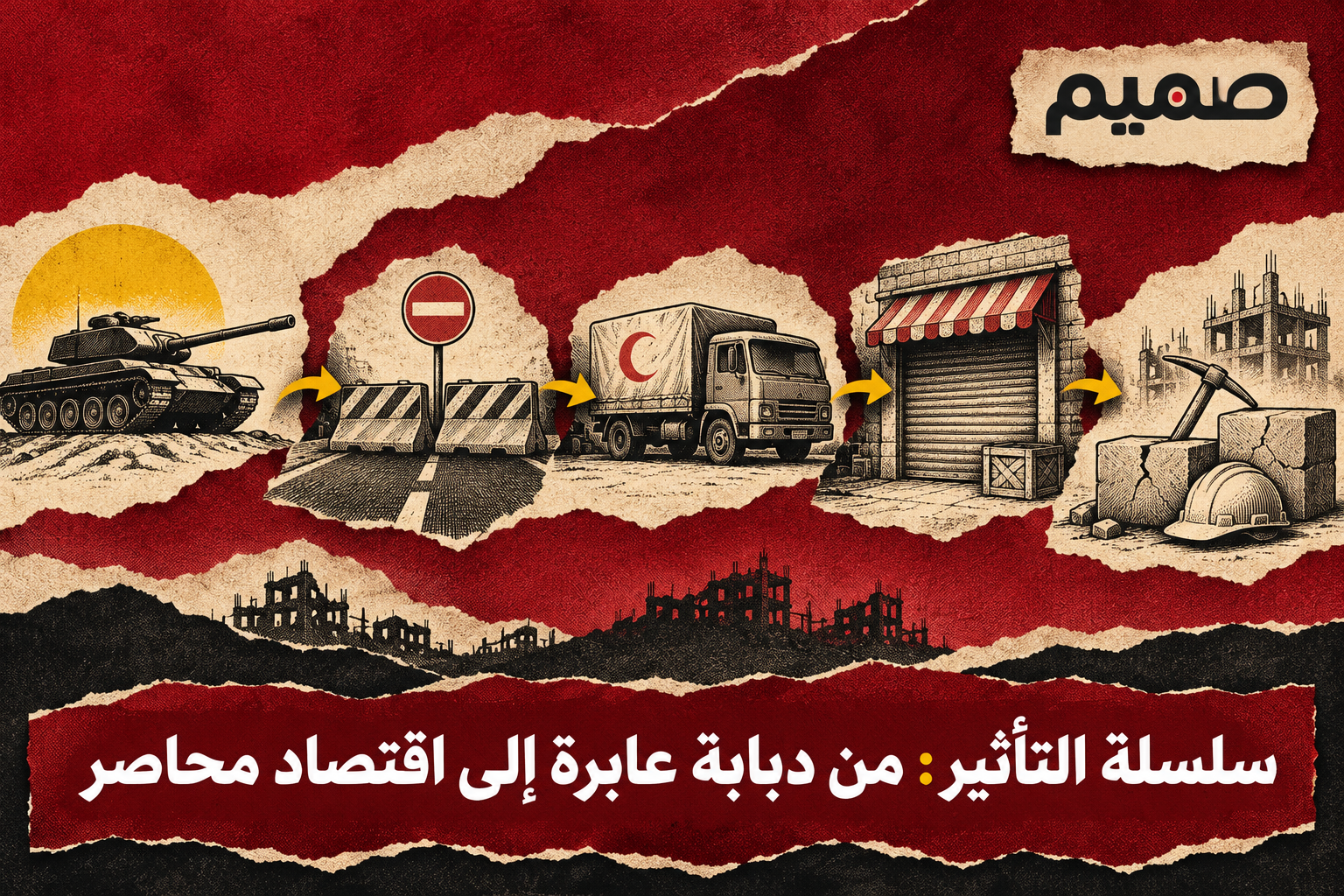
But the strategic impact travels through a longer chain. First, the risk premium on movement widens: the truck driver, trader and family deal not only with an existing closure but also with the possibility of a sudden one. Second, organizations and suppliers become more reluctant to arrange fixed routes when operational boundaries can change.
Third, residents’ return to damaged areas slows because safety becomes temporary and impossible to plan around. Fourth, any reconstruction project becomes less viable if equipment and labor remain exposed to sudden evacuation or changes in access zones.
The impact also extends to trust in information. When residents hear that the operation has ended but see an unsafe road, explosive remnants or recent destruction, the gap widens between the official announcement and the individual decision to return.
This gap is not a psychological detail; it determines when the school, clinic and market resume work, and who first bears the risk of movement. An announcement of withdrawal is therefore insufficient. Field verification and comprehensible civilian notification are needed to identify safe areas and what remains closed.
Describing a “besieged economy” does not imply that there is a new figure measurable from a single operation. The available sources provide no independent estimate of the cost of the military day or its impact on commodity prices. The point is that potential repetition adds a non-price constraint to an economy already devastated: uncertainty about place and time.
The more temporary access maps become, the greater the costs of transportation, storage and informal insurance. The gap between announcing recovery and the actual capacity to carry it out also widens.
The Counterargument: A Limited Operation Does Not Mean the Agreement Has Collapsed
A strong counterargument can be made: the operation was geographically and temporally limited, ended with the troops’ withdrawal and the road’s reopening, and did not turn into a permanent occupation of the area. The Israeli military also declared a specific military objective, while the ceasefire framework continued after the incident. Under this reading, the parties’ ability to contain a security incident and the troops’ return to their positions may be a sign of the agreement’s resilience, not its death. [1] [6] [8]
This argument should be taken seriously, because describing every violation as a total collapse strips the analysis of its ability to distinguish among degrees of escalation. But the operation’s limited nature alone does not answer the more important question: who decides when a violation is “necessary,” and who verifies the target?
The question of compensation or redress after civilians are evacuated and property is destroyed also remains unanswered. A flexible agreement needs known rules for exceptions; an unchecked unilateral exception turns flexibility into an imbalance of power.
Comparing the operation’s duration with its impact can also be misleading. The operation lasted hours, but the precedent it creates may endure much longer. If incursions recur with every claim that a threat exists, the line becomes a guideline rather than a commitment. Conversely, if the incident is followed by a joint investigation, publication of the findings, and guarantees against repetition without a clear standard, it may demonstrate that the institutions are capable of absorbing the shock.
What Can the Mediators Do Now?
The first alternative is not another general statement, but a time-bound incident mechanism: urgent notification to the mediators, definition of the danger zone, measures to protect civilians, and a post-operation record explaining the basis for the operation, its duration and the damage to property. This does not require the full disclosure of sensitive intelligence, but it prevents the strongest party from remaining the sole source of operational truth.
The second alternative is to establish a civilian access map separate from the military dispute. A claim that a tunnel exists in a specific square should not create prolonged ambiguity on Salah al-Din Road or the surrounding humanitarian corridors. Mediators can tie any closure to an announced duration, a safe alternative route and clear notice to residents, and then verify the actual reopening rather than rely on the announcement alone.
The third alternative is to establish a graduated scale of diplomatic consequences. Not every incident is equal, but repetition of the pattern without accountability empties the agreement of substance. The response could begin with unified public documentation of incidents, followed by an urgent meeting of the guarantors, and then by linking some facilitation measures or steps in the next phase to compliance. The idea is not to punish the population or obstruct aid, but to give a foreseeable political cost to violating the operational boundaries.
A practical objection to these alternatives remains: the parties may reject detailed oversight on the grounds of speed or information secrecy. This conflict can be reduced by separating two tracks: a confidential track in which each party presents its evidence to the mediators, and a public track that establishes only the scope, duration, civilian damage and outcome of the remedy. This does not guarantee agreement on the narrative, but it prevents the information dispute from turning into a complete vacuum of responsibility.
Three Possible Paths After the Central Gaza Precedent
The first scenario is containment of the incident and stabilization of the line. Its condition is that the mediators announce a clear remedy, that no similar operations recur west of the line in the following weeks, and that movement on Salah al-Din Road remain stable. Its effects would be to reduce fears of sudden displacement and keep negotiations over the agreement’s phases possible. The two most important indicators are the number of days without an announced incursion west of the line, and the issuance of a written mechanism or joint statement defining rules for handling threats.
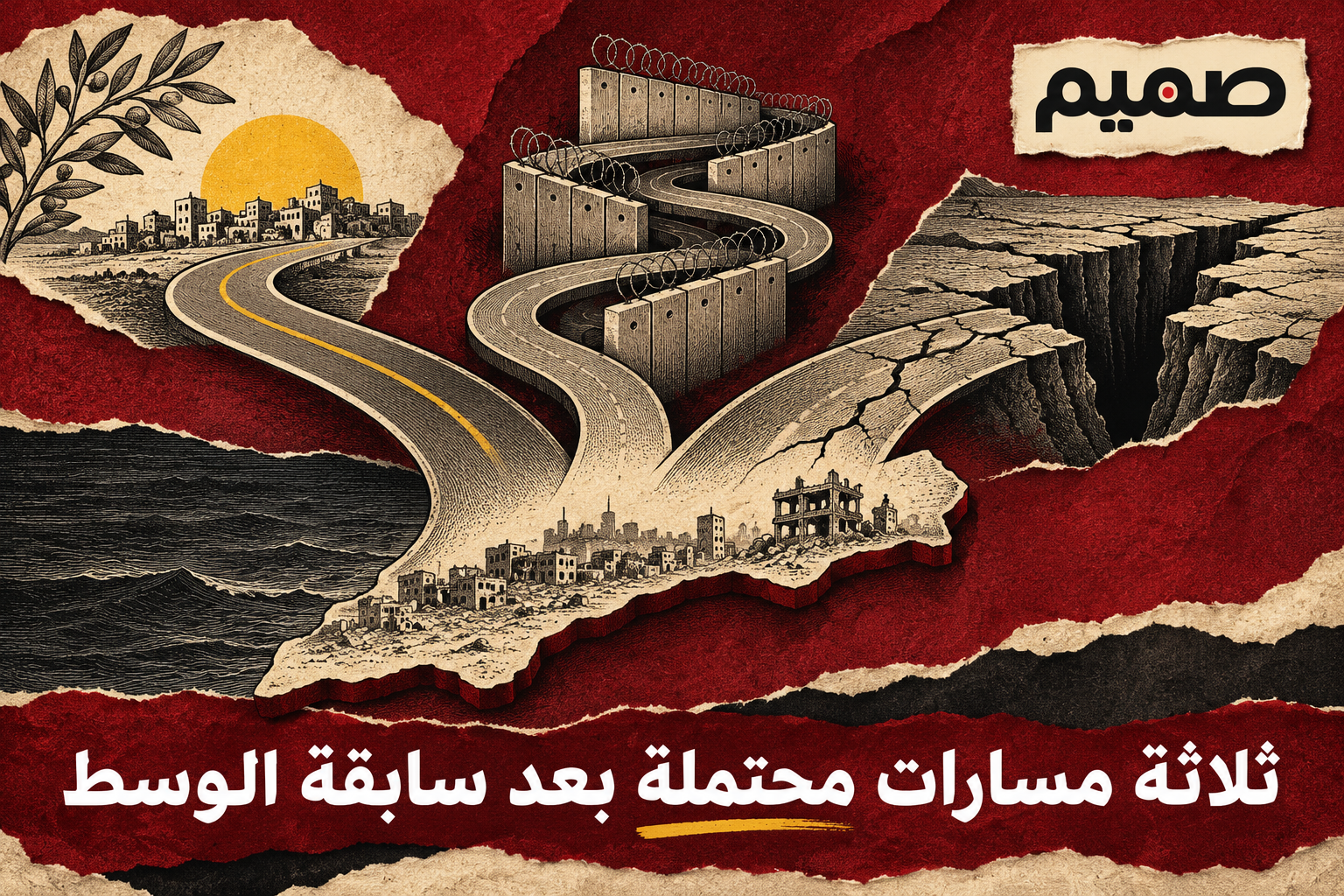
The second scenario is normalization of brief incursions. It would materialize if limited operations lasting hours or days recur under the banner of removing threats, without a formal amendment to the agreement or a binding response from the mediators. Its effect would not be immediate all-out war, but a practical contraction of safe space, increasing evacuations, and disruption to movement and investment in recovery. Its two indicators are repeated evacuation orders and road closures west of the line, and an increase in the number of squares in which “temporary” operations are declared.
The third scenario is a slide toward a broader collapse. Its condition is that a new incursion be coupled with a major military response or that troops remain for longer, and that channels for handling incidents stop functioning or commitments for the next phase are disrupted. Its effects would include the return of large-scale displacement, a decline in aid entering Gaza and the suspension of recovery projects.
Its two indicators are the continued presence of troops or the establishment of fixed positions west of the line after the declared mission ends, and a simultaneous and sustained rise in the frequency of airstrikes and armed responses instead of their return to a containment level.
The Significance That Must Not Be Lost After the Withdrawal
The tanks’ withdrawal does not close the file; it opens a test of the agreement. If the operation can end without clarifying the rules for exceptions and verification, the tactical success of any party may become a strategic loss for the calm. If the mediators use the incident to close the gap between the text and the field, the crisis may become an opportunity to strengthen what has remained fragile.
What should be monitored now is not rhetoric alone, but observable facts: stability on Salah al-Din Road, families returning without new evacuation orders, the absence of fixed military positions west of the line, and the issuance of a joint response to the incident. These indicators will reveal whether the “Yellow Line” remains a withdrawal boundary or is gradually turning into a moving boundary defined by the tank and then acknowledged by silence.
References
[1] Reuters, “Israel says it concludes Gaza tank raid,” November 19, 2026.
[2] Associated Press, “Board of Peace warns of Gaza ceasefire collapse without immediate action,” November 17, 2026.
[3] Al Jazeera Net, live coverage of the start of the first ground operation in central Gaza since the ceasefire, November 18, 2026.
[4] Palestine News and Information Agency (WAFA), report on demolitions and casualties in the central Strip, November 19, 2026.
[5] Al-Araby Al-Jadeed, field report on the withdrawal of troops from northern Nuseirat after demolition and excavation operations, November 19, 2026.
[6] Anadolu Agency, report on the end of the operation and the reopening of Salah al-Din Road, November 19, 2026.
[7] The Guardian, report on Israeli tanks crossing the “Yellow Line,” November 19, 2026.
[8] The Times of Israel, report on the launch of the operation and orders to move civilians away, November 18, 2026.