An Economy Running at Half Capacity: Why More Jobs Do Not Mean a West Bank Recovery
The West Bank labor market added about ten thousand workers in the third quarter of 2026, yet unemployment edged higher and more than a quarter of the labor force remained jobless. Has recovery truly begun, or is the economy redistributing the loss among less secure jobs, weaker wages, and a treasury that passes its deficit on to employees, suppliers, and banks?

Photo rights
The Palestinian Central Bureau of Statistics announced on November 11 that the number of employed people from the West Bank rose from about 733 thousand in the second quarter to 743 thousand in the third quarter of 2026. At first glance, the figure appears to signal a positive turn.
Yet the same release places beside it another, more stubborn figure: unemployment rose from 27.9% to 28.1%, and the number of unemployed people reached about 291 thousand. The question, then, is not whether jobs were added, but whether the economy regained its ability to generate stable income, increase production, and protect human capital.
Or whether it expanded participation in a market that remains unable to absorb those entering it [1].
The importance of this question goes beyond reading a quarterly cycle. The Palestinian economy enters the end of 2026 divided between a deep collapse in production in Gaza, contraction and financial and mobility pressures in the West Bank, and public institutions financing their continued operation by delaying salaries and dues. In such an environment, the number of employed people can rise without living standards improving.
Some prices can fall without households gaining greater purchasing power, and the treasury deficit can appear small on a cash basis while liabilities accumulate outside the accounts of what has actually been paid.
Ten Thousand Jobs Do Not Make a Turnaround
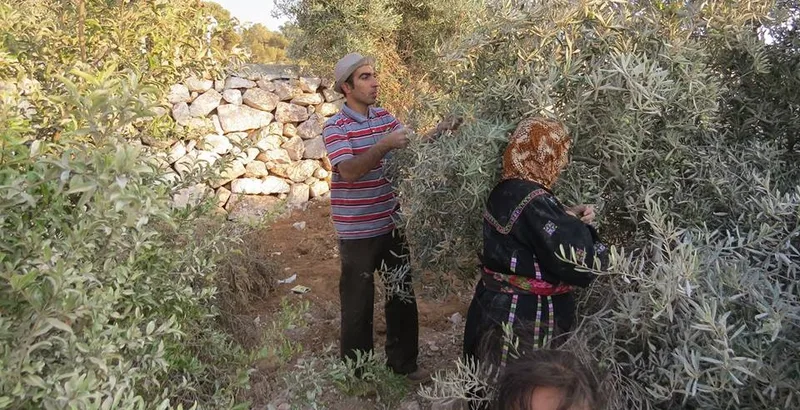
The survey details show that the increase came mainly from the local market, where employment rose by about 11 thousand to 691 thousand workers, with notable contributions from other services; transport, storage, and communications; and then agriculture. But the expansion in employment coincided with labor-force participation rising from 44.9% to 45.3%.
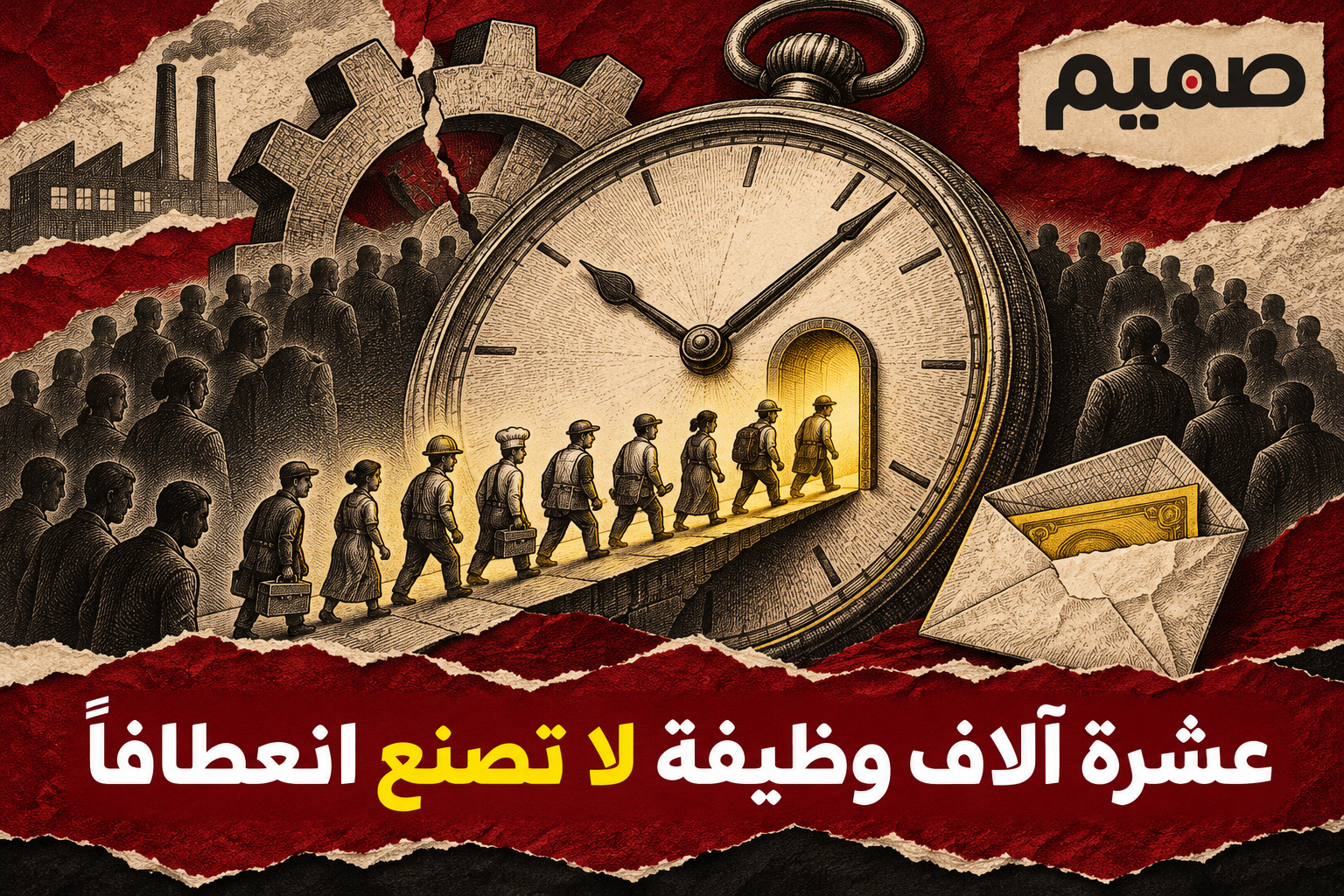
In other words, the number of jobseekers also increased, so the new jobs absorbed some entrants without reducing the mass of unemployment. This is an important statistical fact: improved employment does not automatically equal an improved unemployment rate when labor supply grows at a similar or faster pace [1].
The picture becomes harsher when the averages are broken down. Unemployment among young people holding an associate diploma or higher stands at 44%, rising to 58.5% among educated young women. Women’s labor-force participation does not exceed 18%, compared with 71.9% for men. This is not merely a temporary gap; it signals that years of education are not translating into sufficient productive demand, and that the economy is losing part of the return on its investment in knowledge.
Each prolonged year of waiting erodes skills and pushes graduates to accept work below their qualifications, leave the labor market, or seek migration.
Wages add another constraint. The average daily wage of paid employees in the West Bank was 138.2 shekels, while the average monthly wage of those earning below the minimum wage was 1,448 shekels. In Israel and the settlements, the average daily wage fell from 263.4 shekels in the second quarter to 255.8 shekels in the third, while the number of workers there remained close to 52 thousand [1].
It is therefore not enough to count jobs; they must be assessed for regularity of work, number of hours, protection, added value, and their actual ability to stabilize household income.
Prices further confirm this separation between the indicator and lived conditions. The West Bank consumer price index fell 0.67% in October compared with September, but fuel did not decline: diesel rose 7.15%, gasoline 3.10%, and gas 5.43%. The overall decrease came from items including chicken, eggs, and fruit, while potatoes, vegetables, and fuel increased.
Because transport and energy enter into the cost of most goods and services, a one-month decline in the index does not mean that cost pressure on businesses or households has disappeared [2].
How the Clearance-Revenue Crisis Reaches the Market
The heavier factor is not the demand cycle alone, but how the state is financed while revenues are withheld. An update by the Palestine Economic Policy Research Institute shows that cash expenditure in the first half of 2026 fell 28.9% year on year to 4.9 billion shekels, and that wage and salary payments dropped 30.7% to 2.4 billion.
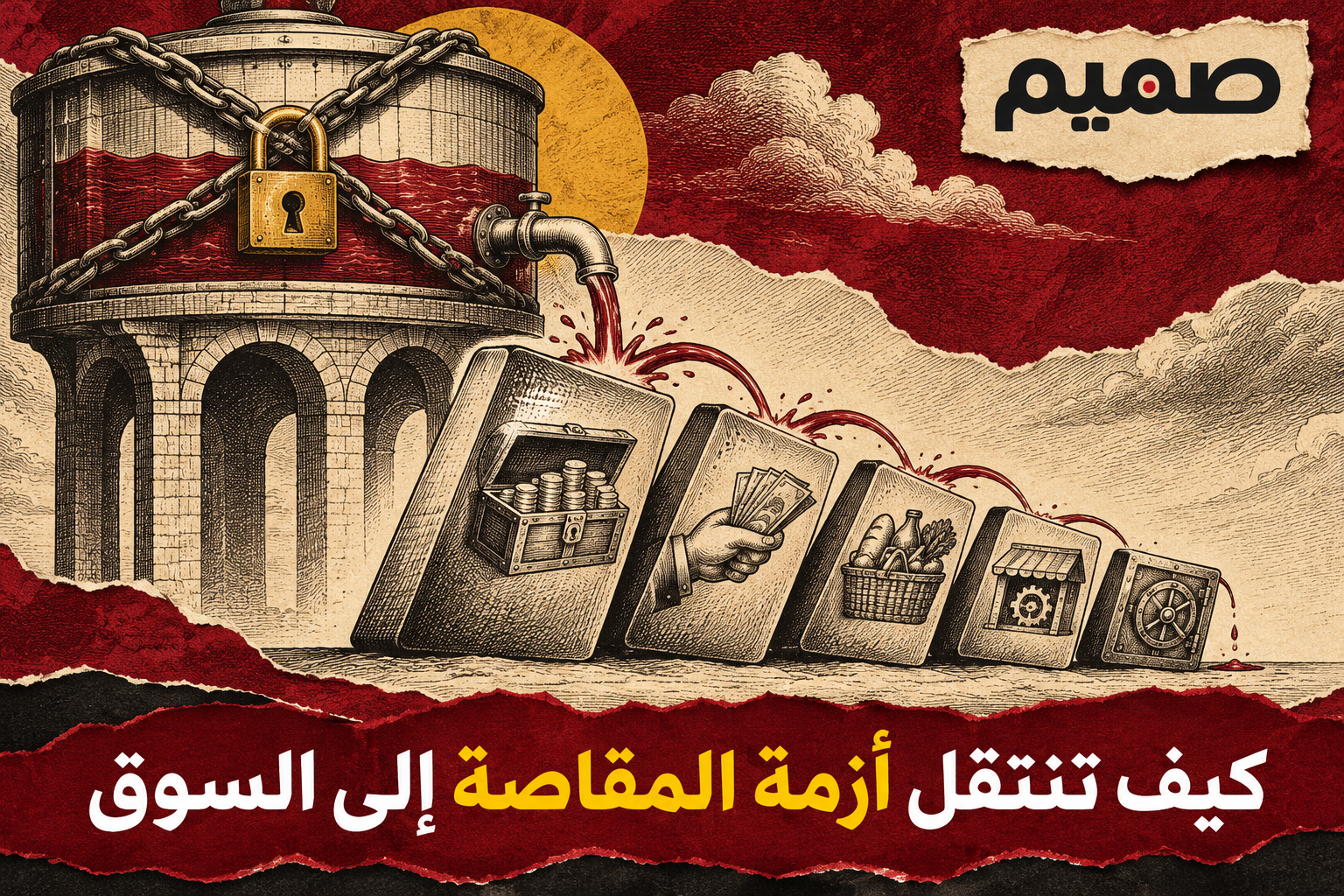
Lower spending may look like a correction of the deficit, but here it reflects a liquidity shortage and the payment of only portions of liabilities rather than a structural reform that reduced the cost of the service itself [3].
The chain of effects begins with an employee receiving part of a salary late, postponing a purchase, drawing down savings, or borrowing more. The shock passes to a shop whose sales fall, then to a supplier awaiting payments from the government or customers, who delays a wage, an investment, or a bank payment. Banks, in turn, face greater demand for credit from the government and its employees while the private sector’s ability to borrow for expansion declines.
This is how the withholding of sovereign revenue turns into weaker domestic demand, less working capital, and higher credit risk.
MAS data estimate arrears at about 22.8 billion shekels in mid-2026 and public debt at about 15.1 billion shekels, with domestic debt predominating [3]. The World Bank indicates that banks’ direct exposure to the Palestinian Authority had risen to 4.2 billion dollars by June.
PA-related lending reached 45% of total credit, while public-sector credit grew and private-sector credit contracted by 4% year on year [4]. The implication is that banks are not only financing the deficit; they are also forgoing part of the financing of productive investment.
International figures for withheld funds differ because their periods and definitions differ. The World Bank puts the cumulative balance near six billion dollars, while UNCTAD calculates deductions and withheld revenues between January 2019 and March 2026 at about 3.67 billion dollars [4][5]. The two figures should not be added together or treated as one measure: the first is broader in time and methodology, while the second is confined to a specific period and categories.
What they establish in common is that the gap exceeds the ability of spending cuts or conventional grants to close it without institutional and social costs.
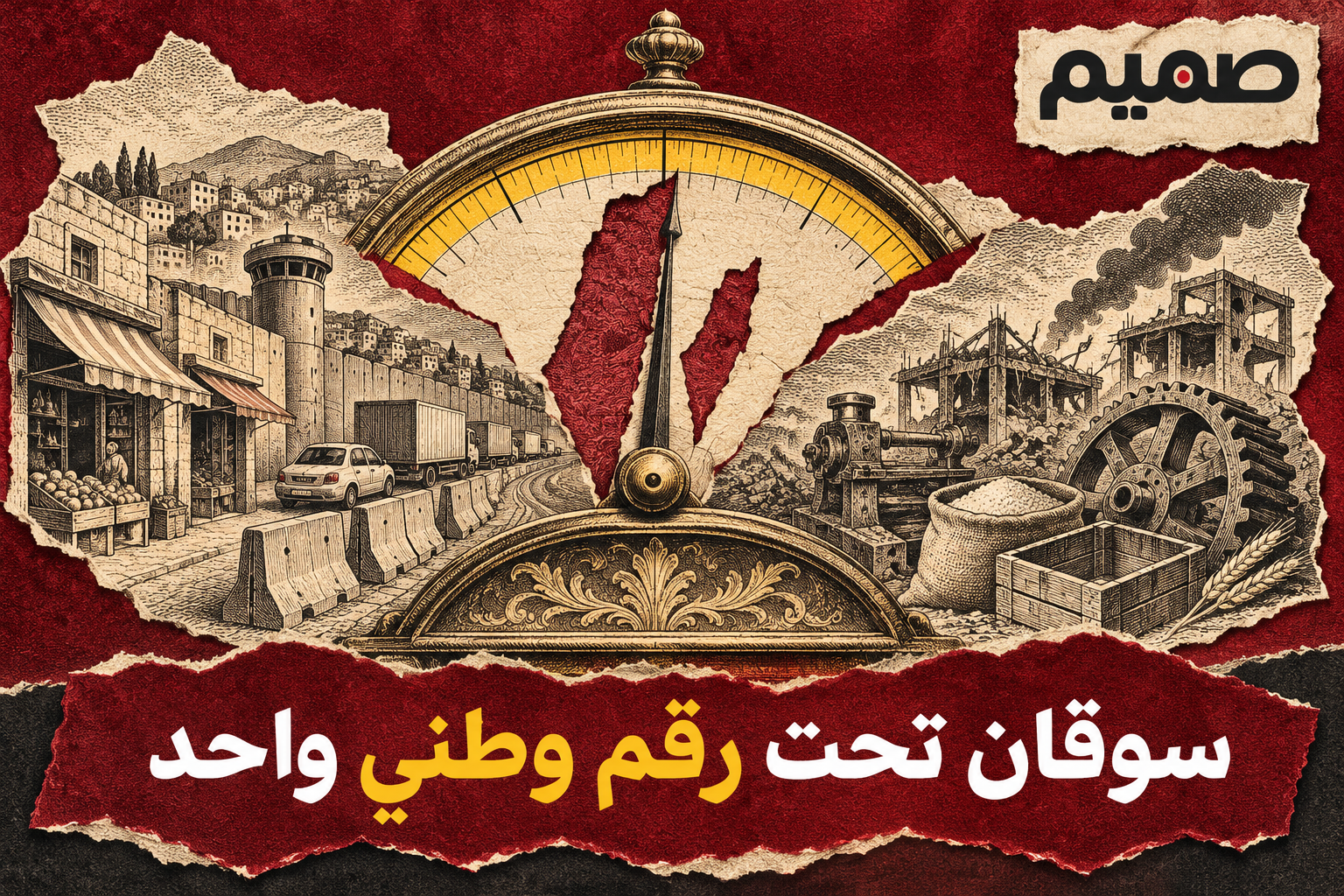
Two Markets Under One National Figure
Reading the Palestinian average becomes more dangerous when Gaza and the West Bank are merged into a single trend. Gaza’s price index recorded a monthly increase of 4.11% in October, after an 11.36% jump in September, while it fell in the West Bank. The statistics bureau attributed the increase in Gaza to restrictions on the entry of goods, disrupted crossings, shortages in supply, weak production, and higher transport, storage, and distribution costs [2].
This is not demand-pull inflation caused by excess purchasing power, but scarcity inflation in an economy whose capacity to supply has been destroyed.
UNCTAD estimates that 92% of Gaza’s economic establishments have been damaged or destroyed since October 2023, that GDP per capita reached 212 dollars in 2025, and that unemployment reached 78%. It also estimates recovery and reconstruction needs at about 71.5 billion dollars [5].
Any subsequent growth from such a severely depressed base may therefore look large in relative terms without restoring previous production or income levels. A statistical rise from the bottom is not a complete recovery; it may simply be a shift from near-total stoppage to limited activity.
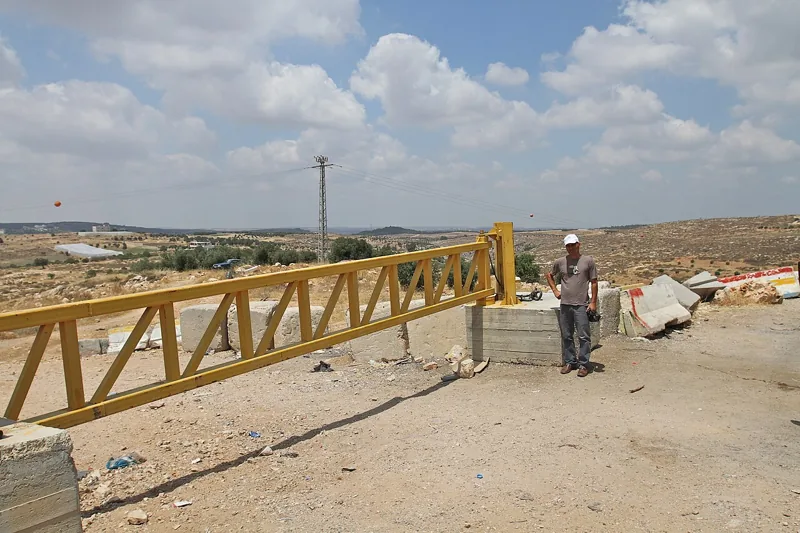
In the West Bank, the constraint does not come from demand and public finances alone. The World Bank links recovery prospects to restoring commercial access and mobility, sustaining services, and rebuilding productive capacity and human capital [4].
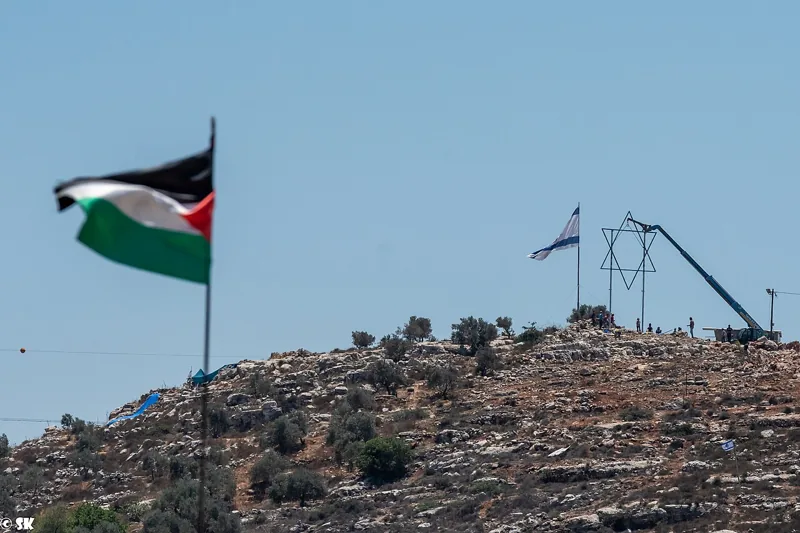
Events on the ground add a direct economic-security cost: on November 12, Al Jazeera documented two attacks on a vehicle workshop and an industrial area south of Nablus, with preliminary losses exceeding two million shekels in the first and three million in the second. Of 1,182 arson incidents documented by the Wall and Settlement Resistance Commission from October 2023 through the end of September 2026, 809 targeted property, vehicles, and facilities [6].
These attacks have effects beyond the value of the asset burned. A business that expects to lose equipment or have difficulty reaching it raises its risk premium, holds precautionary liquidity instead of buying machinery, relocates to a less efficient site, or closes. An insurer, if coverage is available at all, reprices the risk. A bank tightens collateral requirements. A worker loses a day’s pay or a job.
In this way, missing protection enters the cost of production just like fuel and interest, yet it does not appear clearly in a single monthly indicator.
From a Financial Crisis to a Crisis of Institutional Capacity
The World Bank update shows that the financial crisis is no longer an isolated accounting item, but pressure on institutions’ ability to keep services and social transfers regular. Arrears owed to suppliers and employees mean that the state is transferring its liquidity shortage to businesses’ working capital and household budgets [4].
This cycle makes state weakness an additional cause of market weakness; the weaker market then further reduces domestic revenues, intensifying the cycle.
Banking risks are part of the same picture. The World Bank notes that correspondent banking arrangements with Israeli banks have been extended only through December 2026, with no permanent solution. It also notes the accumulation of about 16 billion shekels in physical cash at Palestinian banks alongside a shortage of digital shekel liquidity [4].
If clearing channels are disrupted or the cost of transferring cash rises, the issue does not remain a technical one between banks: it affects financing for food, medicine, and fuel imports, merchants’ settlements, and the system’s ability to receive external transfers.
The counterargument is that the economy has shown a clear capacity to adapt: local employment rose, service, transport, and agricultural sectors moved, and public institutions maintained a minimum level of operation despite the shortage of financing. This argument is partly correct; resilience prevents rapid collapse and creates room for intervention. But resilience is not an inexhaustible resource.
When it is financed by draining employees’ savings, delaying suppliers’ dues, and increasing banks’ exposure, it shifts the cost into the future rather than eliminating it.
Where Is There Room for Policy?
Palestinian economic policy cannot remove sovereign constraints or open crossings through an internal decision, but it can prioritize losses and reduce how they spread. The urgent priority is to protect payments with the largest multiplier effect: basic health care, education, transfers to the most vulnerable groups, and small suppliers for whom a single delayed payment could force them out of the market.
Transparency in the arrears schedule and repayment criteria reduces uncertainty, even when there is not enough liquidity to pay everyone immediately.
The second area is preventing the complete crowding out of the private sector. International guarantees and grants can be directed toward working capital for viable businesses, with clear conditions for preserving jobs, instead of turning every new source of financing into additional public borrowing.
Government-intervention figures for the week ending November 15 point to continued, albeit limited, economic activity despite the crisis: 76 companies were registered and 75 certificates of origin issued. The interventions also included completing import and intellectual-property transactions, alongside internationally funded infrastructure projects [7]. These figures do not prove a broad recovery, but they identify practical channels through which financing can protect existing activity rather than dissolve entirely into the budget gap.
Temporary liquidity support must be distinguished from keeping nonviable businesses alive without assessment; the goal is to protect productive capacity and links between suppliers and markets, not to freeze the economy in a permanent crisis structure.
The third area concerns labor. High unemployment among female graduates and young people cannot be addressed by general training courses unconnected to actual demand. Training must be linked to procurement or export contracts or digital services that can be sold outside the local market, and to hiring incentives measured by whether the job continues after support ends. Safe transport, childcare, and flexible work are also economic components for raising women’s participation, not a separate social add-on.
As for Gaza, it cannot be treated as a conventional employment program before ensuring the flow of goods, materials, and energy and rebuilding the minimum infrastructure. The priority is to move from aid that prevents hunger to spending that restores small productive assets and food, water, and health supply chains, with oversight mechanisms that prevent monopoly and unofficial fees.
Reconstruction that does not restore income will build assets on top of a society stripped of the capacity to demand and maintain them.
Three Possible Paths Through Early 2027
The first path is gradual, conditional containment. It would materialize if regular transfers—even partial ones—of clearance revenues resumed, correspondent banking arrangements were secured, and commercial access and mobility improved. Its expected effect would not be a boom, but more regular salaries and payments, slower growth of arrears, and a limited return of private credit. The clearest two indicators are the share of salary paid on time for three consecutive months and a shift in credit growth from the public sector to private businesses.

The second path is ostensibly controlled attrition. It would continue if transfers remained intermittent and the shortfall were offset by more delays and domestic borrowing while mobility and markets remained constrained. The number of workers might stabilize or increase slightly, but with lower job quality and squeezed real wages. Its two signs are a rising stock of arrears and bank exposure to the PA, and employment growth coinciding with stable unemployment or increased labor underutilization.
The third path is an institutional and financial shock. It becomes more likely if correspondent banking arrangements expire without an alternative, revenue withholding expands, attacks escalate in ways that cut off production centers and major roads, or goods flows into Gaza are disrupted. Its effects range from deeper delays in salaries and services to credit tightening and shortages of imported goods.
Its two indicators are disruption to settlements and external transfers or an increase in their cost, and declines in stocks of food, medicine, and fuel or wider price gaps between regions.
These paths are not forecasts with numerical probabilities; they are test conditions. Parts of them may coexist at the same time: local improvement in a sector or governorate alongside general financial deterioration or a more severe collapse in Gaza.
Judgment of the economy should therefore not be reduced to the GDP or unemployment figure alone, but should consider income regularity, job quality, the movement of credit, and institutions’ ability to provide services without deferring their cost.
The Decisive Indicator Is Not the Number of Jobs Alone
The latest development sends a dual signal: the Palestinian market remains able to create some work despite the constraints, but it has not yet restored a sound mechanism of accumulation. An increase of ten thousand workers is important news, but the rising number of unemployed people, widening graduate unemployment, falling wages for work in Israel and the settlements, and continuing pressure from fuel costs and arrears all prevent it from becoming a recovery story.
What deserves attention in the coming months is whether the new jobs will last and pay wages above the cost of living; whether credit will return to production instead of financing the state’s gap; and whether clearance transfers and banking channels become regular. Without that, the economy will continue to function, but at half capacity, financing its survival from the assets of households, businesses, and institutions that it needs for any future recovery.
References
[1] Palestinian Central Bureau of Statistics, Basic Results of the West Bank Labor Force Survey, Third Quarter 2026, November 11, 2026.
[2] Palestinian Central Bureau of Statistics, Consumer Price Index for October 2026, November 12, 2026.
[3] Palestine Economic Policy Research Institute (MAS), Palestinian Economic Update — October 2026.
[4] World Bank, Palestinian Economic Update — Fall 2026 and West Bank and Gaza data.
[5] United Nations Conference on Trade and Development (UNCTAD), Report on UNCTAD Assistance to the Palestinian People, September 24, 2026.
[6] Al Jazeera Net, “Settler Fires Consume Palestinians’ Livelihoods in the West Bank,” November 12, 2026.
[7] Palestinian News and Information Agency (WAFA), Government Interventions Report for the Week of November 8–15, 2026, November 16, 2026.