Palestinian prices in October: one average hides three different directions
Gaza, the West Bank and Jerusalem followed different price paths. Sameem examines the distinction between the overall index and a household’s bill, and between monthly and annual comparisons.
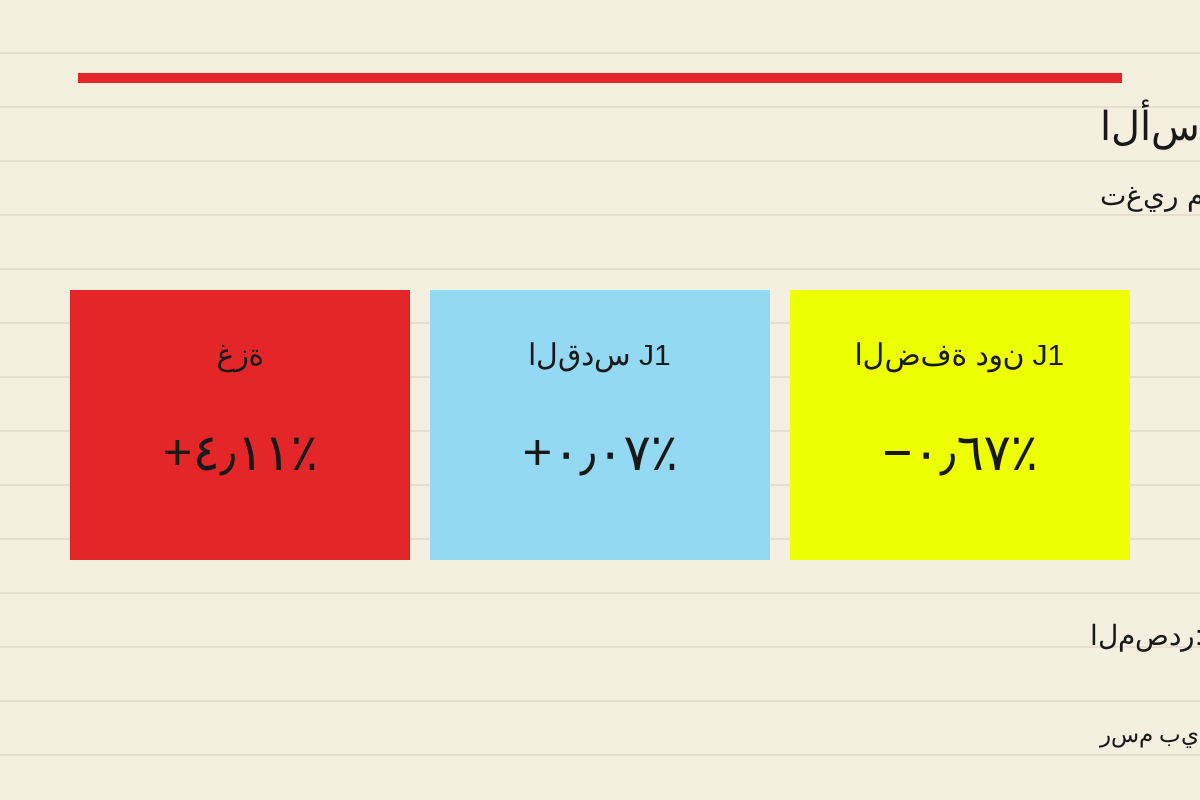
Photo rights
The Palestinian price index for October 2026 paints a picture that differs by region. While the overall average rose, prices fell in the West Bank, continued rising in Gaza and changed only slightly in Jerusalem. The national percentage alone therefore does not explain what households faced.
In its release published on 12 November, the Palestinian statistics agency announced a 1.36% rise in the consumer price index compared with September. The increase was 4.11% in Gaza and 0.07% in Jerusalem’s statistical area J1, against a 0.67% decline in the West Bank excluding that same area of Jerusalem.
By Sameem’s calculation, the difference between the change in Gaza’s index and the West Bank’s was 4.78 percentage points. This describes differences in price trends between two months; comparing the prices of the same goods across the regions requires their monetary amounts and identical sales units.
Even within a region, goods moved in different directions. In the West Bank, fresh chicken prices fell 14.54% and eggs 4.95%, while diesel rose 7.15% and gas 5.43%. This helps explain why a household relying more heavily on a particular item may experience something different from the overall index.
The picture changes in the annual comparison: the national index fell 1.45% from October 2025 and Gaza’s fell 6.40%, while the West Bank’s rose 2.48% and Jerusalem’s 2.54%. The monthly comparison uses September as its base, while the annual comparison uses October of the previous year. Monthly increases and annual declines can therefore coexist.
Assessing purchasing power requires reading prices alongside income and employment. The priorities of the recovery program presented by the International Labour Organization on 10 November stress restoring livelihoods and social protection. Price data alone cannot establish whether household income has improved or prove the separate effects of restrictions and supplies on each product.
Methodology
An original desk-based reading of consumer price index data. Sameem calculated the monthly change gap between Gaza and the West Bank: 4.11 − (−0.67) = 4.78 percentage points. The ILO announcement provided livelihood context, without treating prices as an independent measure of income or welfare.
Limitations
October 2026 is the measurement month; 12 November is the data release date. J1 includes the parts of Jerusalem annexed in 1967; the West Bank index cited excludes that area. The 4.78-percentage-point difference concerns rates of change, not differences in shekel price levels. The overall index does not represent every household’s spending basket or income. This reading does not attribute price changes to a single cause or mix wage and price reference periods to calculate real wages.