
NASA observations show global mangrove recovery after decades of decline
NASA’s reading of Landsat imagery finds global improvement since around 2010, while losses continue elsewhere.
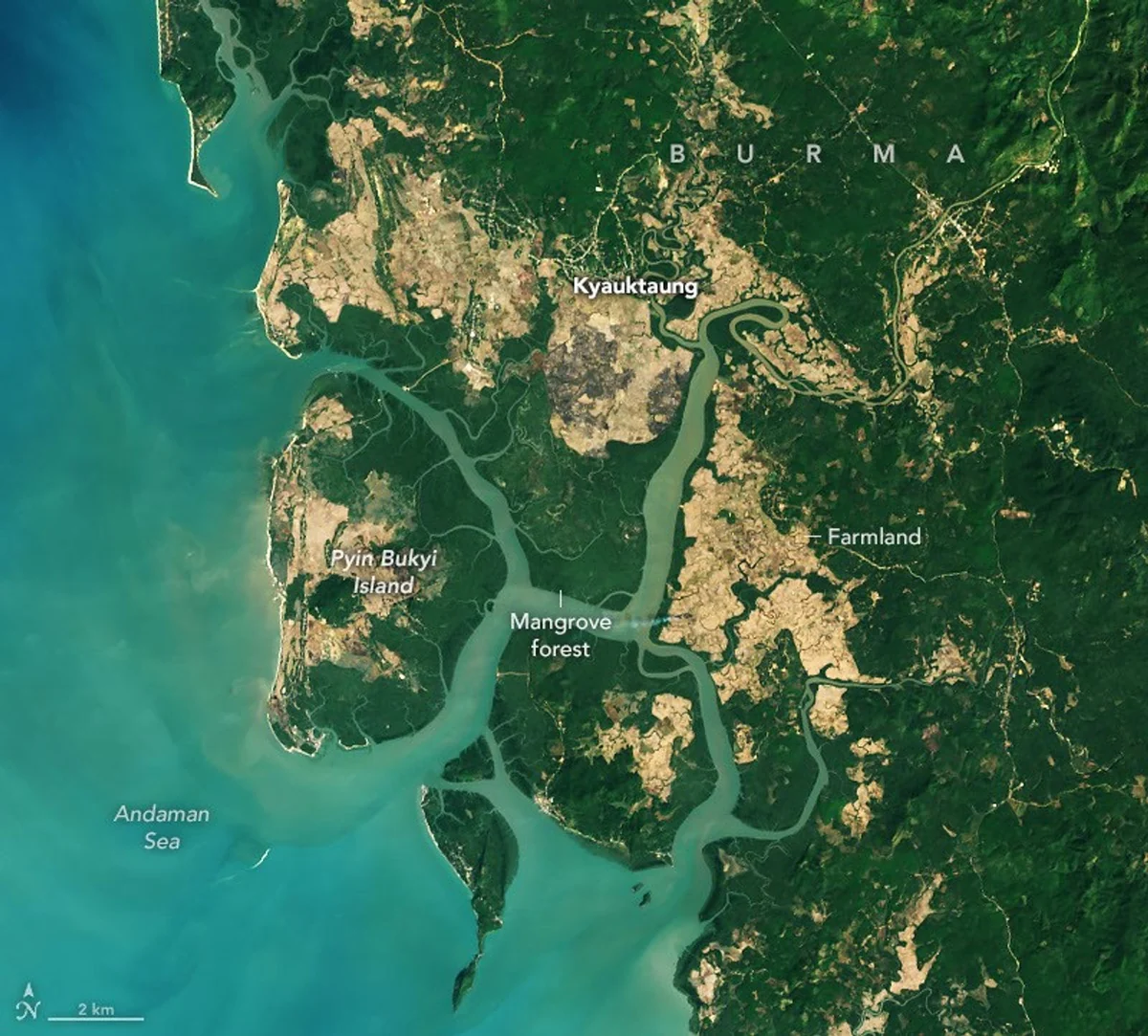
Photo rights
In an article published on 13 November, NASA Earth Observatory presented results of long-term monitoring of coastal mangroves. The observations indicate a global recovery beginning around 2010 after decades dominated by decline. Researchers analyzed Landsat satellite images from 1984–2023 to track changes in forest extent and canopy density.
According to the presentation, the world lost nearly three thousand square kilometers of mangroves between 1984 and 2010, then gained nearly two thousand square kilometers afterward. Areas in Asia, Australia and South America led expansion, driven by both trees spreading into new areas and restoration of degraded forests.
The findings show that global improvement does not mean local pressures have disappeared or all regions are recovering at the same pace. NASA’s article publication date also differs from the period covered by the study’s data, which ends in 2023.