The Knesset Speakership and the E1 Freeze: A Real Shift or Merely a Delay?
In less than twenty-four hours, the Knesset speakership passed to Matan Kahana with the support of 66 lawmakers, and the opening of construction bids for the E1 project was frozen until a new Israeli government is formed. For Palestinians, the significance of the two developments lies not in the change of names, but in a harder question: can the new parliamentary majority turn legal delay and international pressure into a political halt, or will the project return once a coalition is completed?
On the evening of November 17, 2026, the Knesset elected Matan Kahana as its new speaker by 66 votes to 52, ending the hold of Benjamin Netanyahu ally Amir Ohana over the post.
During the same hours, Israel’s attorney general blocked the opening of bid envelopes for the construction of 1,234 units in the E1 project until a new government is formed. The two developments combined a shift at the center of parliamentary decision-making with a temporary legal halt to a settlement project that affects the connection between Jerusalem and the West Bank. [1][2]
The question is not whether Gadi Eisenkot’s camp achieved a procedural victory; the voting result establishes that. The question is whether it can turn authority over procedure into a different policy toward Palestinians. The Knesset speaker controls the agenda, but does not undo contracts that have not been canceled or single-handedly change the balance of power inside a government that has not yet been formed. The E1 freeze prevents an immediate fait accompli, but leaves the final decision to the next coalition.
The moment matters because E1 is not an ordinary housing plan in an existing settlement. Its location between East Jerusalem and Ma’ale Adumim would create a link between the settlement bloc and Jerusalem, while pressing against Palestinian contiguity between the northern and southern West Bank and Jerusalem’s connection to its surroundings. The fate of the tender therefore becomes an early test: will the new camp merely rearrange Israeli institutions, or reconsider the policies that created facts on the ground?
The Vote That Changed the Procedural Balance
The first fact is clear: Kahana won 66 votes, while Likud candidate Ofir Katz received 52. The Associated Press confirms the result, while Reuters explains that the office gives its holder considerable influence over which laws reach a vote. Eisenkot’s allies also secured the chairmanships of key committees, the gateways where legislation is drafted, amended, and blocked before reaching the plenary. [1][2][8]
This majority is broader than Eisenkot’s immediate bloc. According to Reuters, his camp and allies hold 48 seats, while the decisive votes came from parties representing Arab citizens of Israel, whose lawmakers number 19. Al Jazeera explains that members of the Joint List and the United Arab List supported Kahana, making the vote the first practical proof that a majority could be assembled against Netanyahu, even if it has not yet become a cohesive governing coalition. [2][7]
But a majority for electing a parliamentary speaker is not necessarily a governing majority. Selecting the chair requires only a temporary agreement on one candidate. Forming a government, by contrast, requires agreement on the budget, conscription, religion and state, war, and relations with Palestinians. These issues divide right-wing, centrist, Arab, and Haredi parties more than their opposition to Netanyahu unites them. The vote of 66 lawmakers therefore proves an ability to coordinate, not yet an ability to administer a full program.
The Speakership Confers Power Over Timing
The Knesset speaker’s authority is not symbolic. In conjunction with the chamber’s bodies, the speaker can influence the order of proposals and session dates, and, together with committee chairs, can accelerate or slow bills. Reuters says the camp’s priorities include an independent commission of inquiry into the October 7, 2023 attack, imposing a term limit on the prime minister, and repealing laws that opponents say curtailed judicial powers. [2]
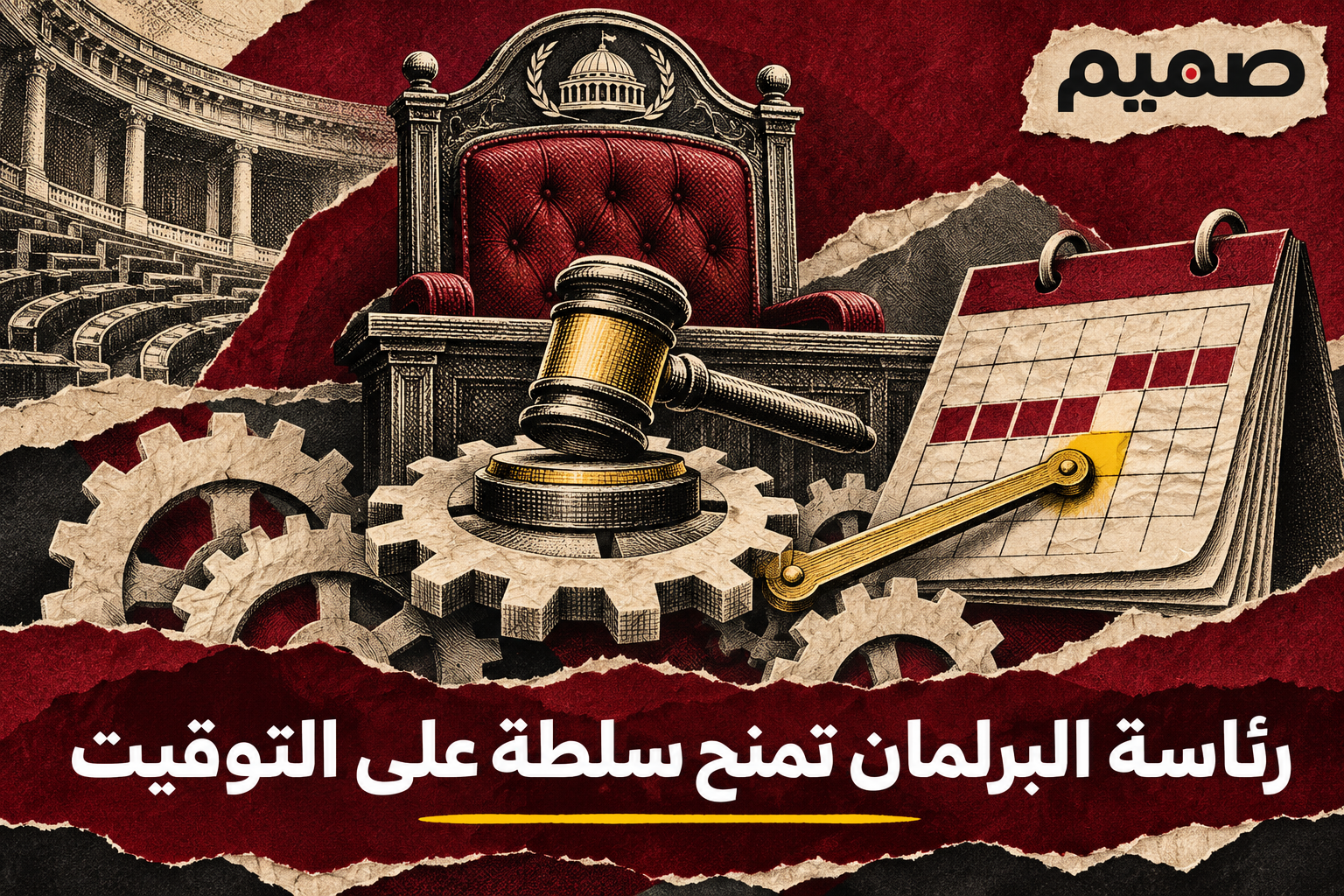
This means Kahana can turn parliamentary time into a political resource. Every week without a stable government gives the Knesset room to establish legislative or oversight facts for a caretaker government. Committees can summon officials, request documents, and build a public record that raises the cost of unilateral decisions.
In the Palestinian case, that could translate into greater scrutiny of tenders, creeping annexation, and settler violence, but it does not guarantee results unless a majority forms for each step.
Eisenkot’s camp has an immediate interest in establishing that it controls the institutions before it controls the premiership. Netanyahu’s interest, meanwhile, is to prove that the new majority is circumstantial and depends on Arab votes that he can stigmatize politically. Likud described Kahana’s election as having been accomplished with the votes of those it called “supporters of terrorism,” continuing an attempt to delegitimize Arab parties’ participation in forming a majority. [2]
For Palestinians, this equation has two faces. Arab lawmakers’ participation gives them greater bargaining power at a narrow parliamentary moment, but it may also prompt opponents to portray any concession on settlements as evidence of Arab “blackmail.” The effect of their participation will therefore be measured not by the number of posts alone, but by whether it becomes measurable conditions: halting tenders, protecting threatened communities, or changing the course of annexation legislation.
The E1 Freeze Exposes the Limits of a Caretaker Government
The second development came from Attorney General Gali Baharav-Miara. According to the Times of Israel, she ordered the Israel Land Authority and the Housing Ministry not to open bid envelopes for 1,234 units until a new government is formed. The decision was based on a rule requiring a caretaker government to exercise restraint when its decisions have far-reaching consequences that bind its successor. [5]
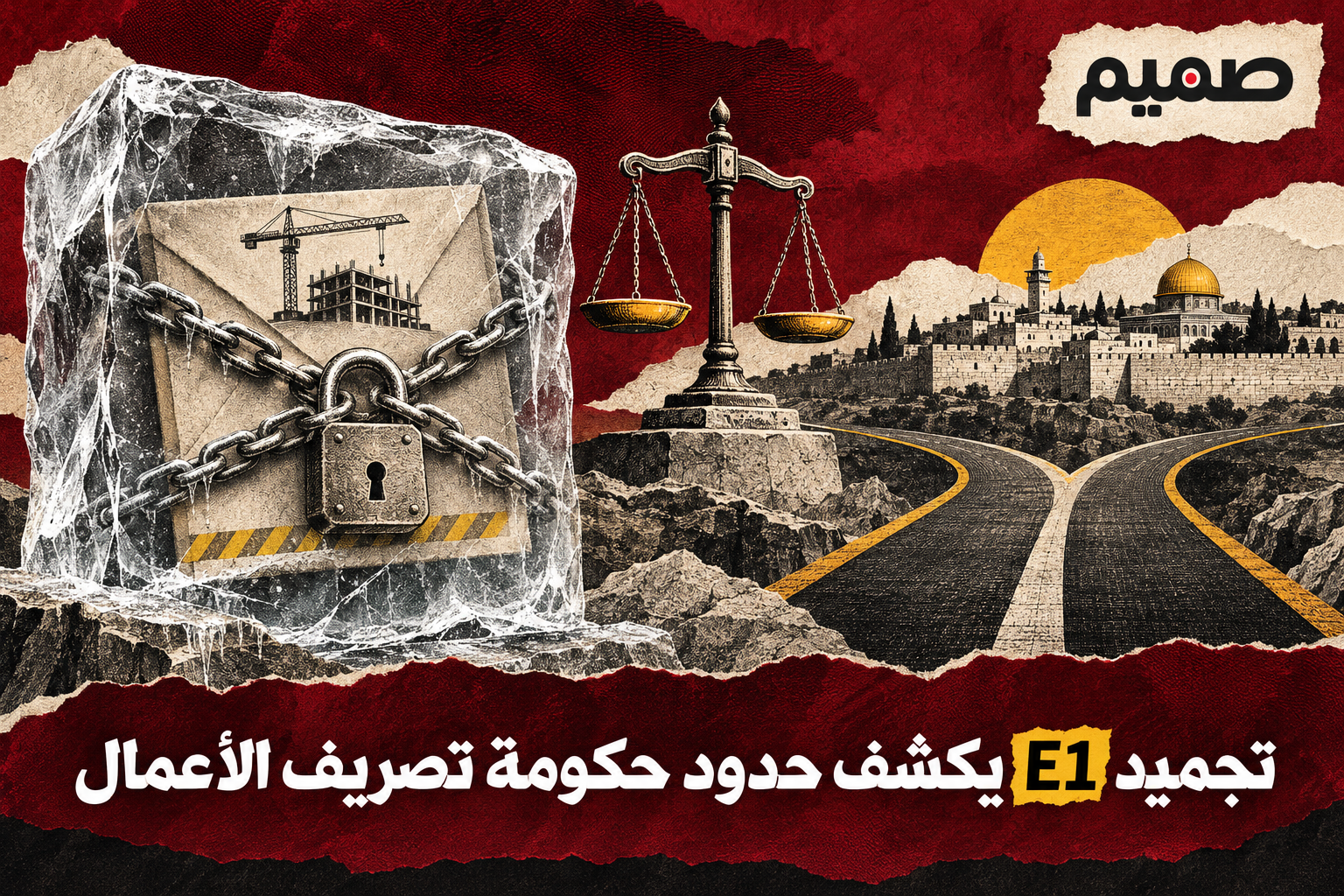
The distinction is crucial. The tender was not canceled, and no judgment invalidated the plan. What was halted was the transition from company offers to choosing winners and signing commitments that would be difficult to reverse. That stage had been scheduled for November 19, after bidding closed in October. The delay gives the next government a chance to decide before contractual rights arise, but leaves the project’s entire planning and legal framework intact.
Earlier Palestinian data show that 1,234 units are only the first part of 3,401 units included in two complementary tenders. In September, WAFA documented the division between tender 186/2026 and tender 460/2025, which includes 2,167 units. It also stressed that issuing tenders does not mean construction begins immediately, because selecting winners, contracts, permits, and infrastructure are separate stages. [6]
These stages make the delay important without warranting an exaggerated description. Before contracts are signed, cancellation carries a lower legal and financial cost. Afterward, claims, compensation demands, and the interests of companies and financing institutions emerge. This is why the attorney general described opening the envelopes as a step that could bind the next government. Politically, the decision did not temporarily halt settlement construction because it is illegal under international law; it halted it because an outgoing government should not tie its successor’s hands.
Sanctions Shifted the Cost to Companies
One day before the freeze, Britain imposed sanctions on eight construction and property-development companies linked to settlement expansion, including asset freezes and bans preventing directors from serving in management. The official statement linked the timing to the E1 tender deadline, warning companies against bidding, building, and profiting from the project. [4]
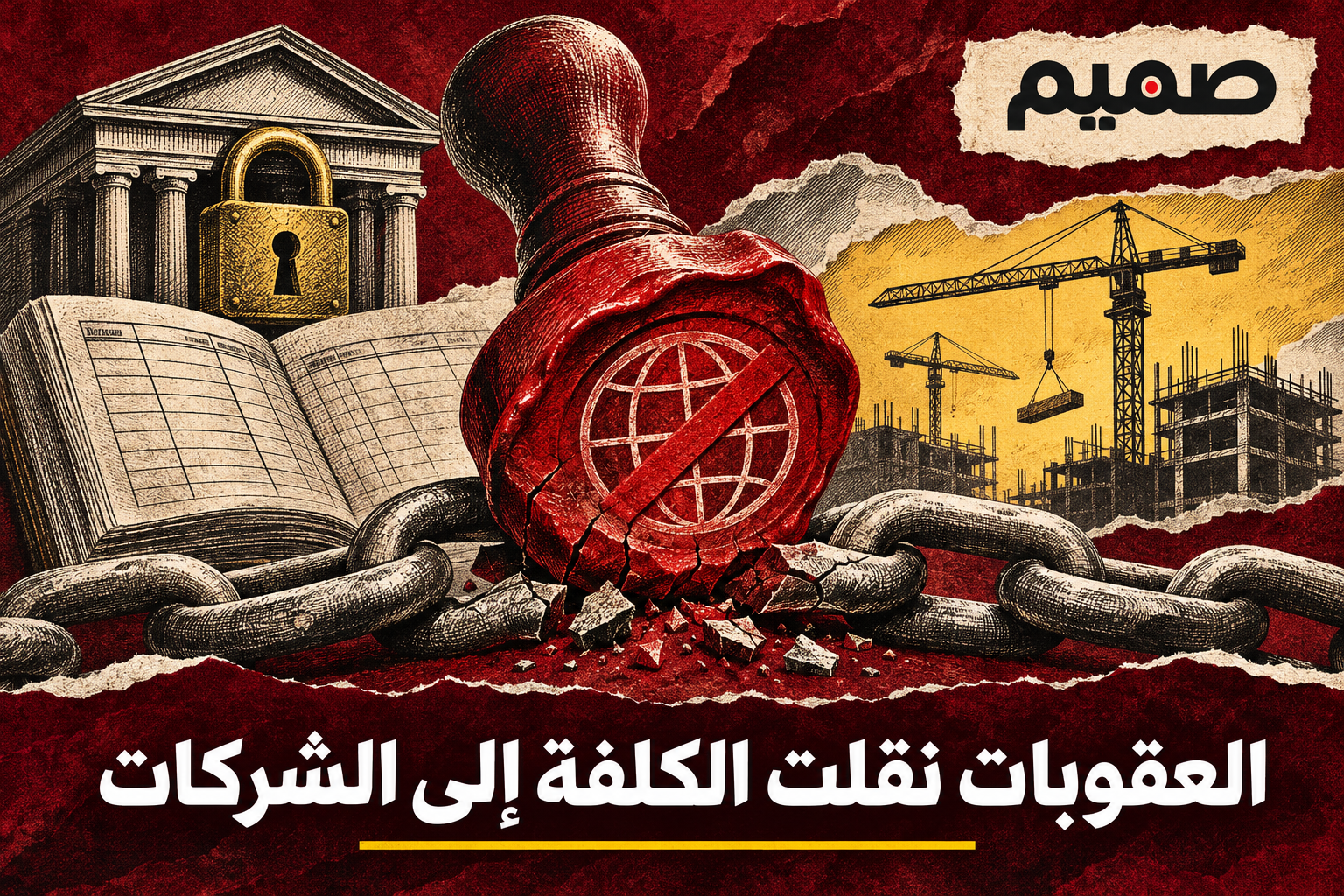
The importance of this step is that it shifts pressure from general condemnations to the implementation chain. The plan needs developers, contractors, engineers, banks, marketing, and insurance. When companies face the risk of asset freezes or transaction restrictions, the cost of participation rises even if the Israeli political decision remains in favor of construction. This mechanism does not automatically stop the project, but it reduces the number of parties willing to bear the risk.
The Guardian’s coverage linked the sanctions to the postponement decision, but also carried Israeli diplomats’ denial that the freeze was a direct response to Britain. The more accurate reading is therefore not to reduce the cause to one factor. The stated basis is legal and concerns the powers of a caretaker government, while international pressure and the threat of sanctions create an environment that raises the price of proceeding. [3]
The calculation facing the next government is complex: canceling the tender could trigger a confrontation with the settler right and Ma’ale Adumim municipality, while proceeding could widen the sanctions, harm Israeli companies, and deepen isolation. The Guardian quoted Eisenkot as opposing E1 expansion because it harms Israel’s international standing. This is an important position, but it does not by itself amount to a pledge to cancel the whole project or a program to dismantle the wider settlement structure. [3]
What Changes for Palestinians?
The first effect is spatial. According to WAFA, the project puts pressure on contiguity between the northern and southern West Bank and on Jerusalem’s connection to its Palestinian surroundings. The Guardian explains that the land lies between Jerusalem and Ma’ale Adumim and that construction would deepen East Jerusalem’s separation from the West Bank. This means the issue is not only the number of apartments, but who controls the corridors and whether a contiguous Palestinian space can be built. [3][6]
The second effect is immediate for Bedouin communities. The Guardian points to the demolition of homes in a Bedouin community inside the area in early November. Freezing bid envelopes does not restore a demolished home, nor does it necessarily halt eviction orders, roads, and associated infrastructure. The contractual track may stop while other pressures continue to create a gradual reality before the foundations of the units themselves are poured. [3]
The third effect is political. If Eisenkot needs the support or abstention of Arab lawmakers, issues such as E1 become a test of the value of that support. They can demand cancellation rather than postponement of the tender and tie parliamentary confidence to specific steps. But their ability depends on whether other parties are willing to pay the price of an open alliance with them and whether Eisenkot chooses Haredi partners or a unity government that reduces his dependence on them.
The fourth effect is international. British sanctions create a precedent that targets companies, not only officials. If other countries or financial institutions follow, settlement construction could become a compliance and risk issue rather than merely a diplomatic dispute. If measures remain confined to one country, companies may restructure their dealings or rely on domestic financing, weakening deterrence.
The Counterargument: Postponement Is Not a Political Shift
An optimistic case can be made that Kahana’s election, the tender freeze, and the sanctions occurred in one sequence, and that the new majority is more sensitive to international isolation and less tied to the far right. This argument rests on Eisenkot’s opposition to E1 and on the speakership and committee chairs giving his camp tools to prevent a caretaker government from imposing irreversible facts. [2][3]
But the counterargument is too strong to be reduced to pessimism. Kahana himself is a right-wing politician from a military and partisan background that does not make a change in policy toward Palestinians an automatic outcome. The 66-vote majority was also formed to displace Netanyahu’s candidate, not around a shared Palestinian-policy program.
The priorities declared so far have focused on investigating October 7, reforming the judicial system, and limiting the prime minister’s term, not on ending the occupation or freezing all settlement construction.
The attorney general’s decision also does not necessarily cover the other 2,167 units on the same timetable, nor does it cancel the master plan. WAFA data show that all of the project’s units had entered the tender process by September. The next government could therefore use the postponement to bargain over timing or adjust the scope and then allow implementation to resume under the cover of more orderly procedures. [6]
As for the sanctions, their effectiveness depends on breadth and continuity. Eight companies do not constitute the entire construction and financing sector. Unless other states, markets, and banks join, the effect may remain symbolic or open to legal circumvention. A new Israeli government could also offer limited concessions on E1 to improve its image while less prominent expansions continue elsewhere.
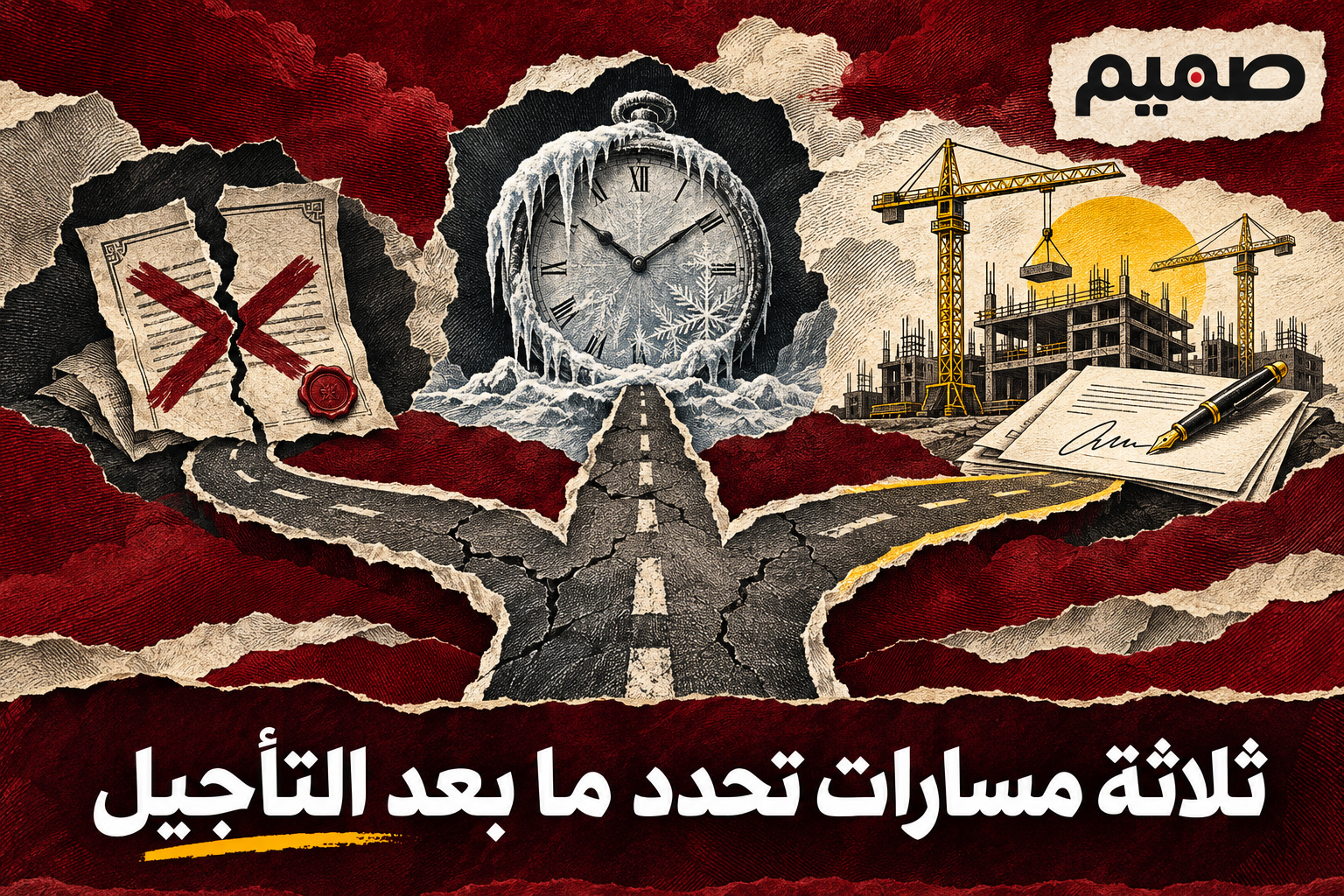
Three Paths That Will Determine What Follows the Delay
The first path is conditional political cancellation. It would materialize if Eisenkot succeeds in forming a government supported by a majority that believes E1’s international and legal costs outweigh its domestic gains, and if Arab lawmakers or other partners condition their support on withdrawing the tender.
The result would be temporary protection of the geographic corridor and a prolonged delay to the project, not a comprehensive solution to settlement construction. The two clearest indicators are a government decision withdrawing tenders 186/2026 and 460/2025, and a halt to demolition orders and infrastructure work in the communities located within the area.
The second path is an extended freeze without cancellation. It would emerge if government negotiations stalled or a new leadership preferred to avoid both a domestic and an international confrontation. The tenders would remain in place without winners being selected, while court battles and pressure on Palestinian communities continued. The two indicators are continuation of the ban on opening envelopes after the government is formed without a withdrawal decision, and official tender dates being periodically revised rather than canceled.
The third path is an orderly resumption. It would occur if a unity or right-wing government capable of absorbing sanctions were formed, or if Eisenkot’s camp lost its chance to govern and Netanyahu returned with an alternative majority. The bids could then be opened and contracts signed with arrangements to protect companies domestically. The two indicators are announcement of a new binding date for selecting winners and additional companies or banks entering implementation despite British restrictions.
Across the three paths, tracking the Knesset speaker’s rhetoric is not enough. Decisions by the Land Authority and Housing Ministry, the coalition’s composition, the terms of Arab lawmakers’ support, and the names of companies bidding or withdrawing must all be monitored. These are indicators linking politics to material outcomes rather than treating a change of personalities as a completed transformation.
The Meaning the Coming Weeks Will Test
What happened on November 17 and 18 opened a window but did not close the E1 project. The Knesset moved to a leadership capable of controlling the agenda, the law prevented a caretaker government from signing far-reaching commitments, and Britain raised the commercial cost of participation. Yet each tool is temporary or conditional: a speakership without a government, a freeze without cancellation, and sanctions without a broad coalition.
For Palestinians, the true value of this shift will emerge when the majority moves from a number in an internal election to a decision that prevents construction, protects a community, or stops a road that cuts through the land. Until then, the decisive indicator remains twofold: are the tenders officially withdrawn, and does pressure on the ground in the project area stop? If either is absent, what appeared to be a political shift may be only a more elegant postponement of the same reality.
References
[1] Associated Press, Matan Kahana elected new Knesset speaker with support from Netanyahu’s opponents, November 17, 2026.
[2] Reuters, Knesset speaker elected with support from Netanyahu’s opponents, November 17, 2026.
[3] The Guardian, E1 construction contracts postponed after British sanctions, November 18, 2026.
[4] Reuters, British sanctions on settlement companies ahead of the E1 tender deadline, November 17, 2026.
[5] Times of Israel, E1 tender halted until a new government is formed, November 18, 2026.
[6] WAFA, tendering completed for 3,401 units under E1 tenders, September 17, 2026.
[7] Al Jazeera, implications of Matan Kahana’s election and the cohesion of the change bloc, November 18, 2026.
[8] Al-Araby Al-Jadeed, Kahana’s election and the change camp’s control of the legislative agenda, November 17, 2026.